Category: Artwork Stories

  • Chen Bachar Interview: Ten Questions from ARTiculAction Art Review

    Chen Bachar Interview: Ten Questions from ARTiculAction Art Review

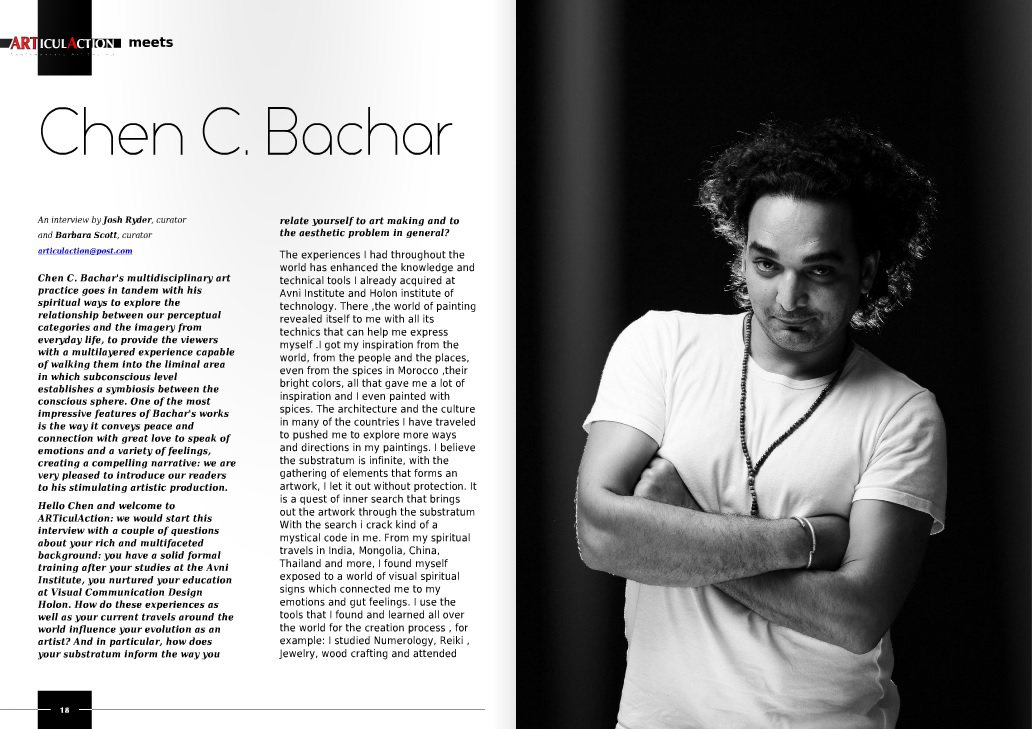
    In the anniversary special issue of ARTiculAction Art Review, curators Josh Ryder and Barbara Scott interviewed Chen C. Bachar about his training at the Avni Institute and Holon Institute of Technology, his spiritual travels, his creative process and his relationship with the viewer.

    The magazine described his practice as one that “goes in tandem with his spiritual ways to explore the relationship between our perceptual categories and the imagery from everyday life”, and noted the way his work “conveys peace and connection with great love to speak of emotions and a variety of feelings”.

    We split the interview into stories. Each one takes a single question, Chen’s full answer in his own words, and a painting from the feature: from African Woman and Gipsy to Thoughts, Childhood, Steve Jobs and John Lennon.

    The stories

    The original magazine pages are in the Press section. Every painting mentioned here can be seen in the gallery, and you can ask about any of them through the inquiry form on its page.
  • The Fisher Man: How Travel Shaped Chen Bachar’s Painting

    The Fisher Man: How Travel Shaped Chen Bachar’s Painting

    Before he could paint the people and places he met, Chen Bachar learned the craft at the Avni Institute of Art and Design and studied visual communication at the Holon Institute of Technology. Then came the journeys.

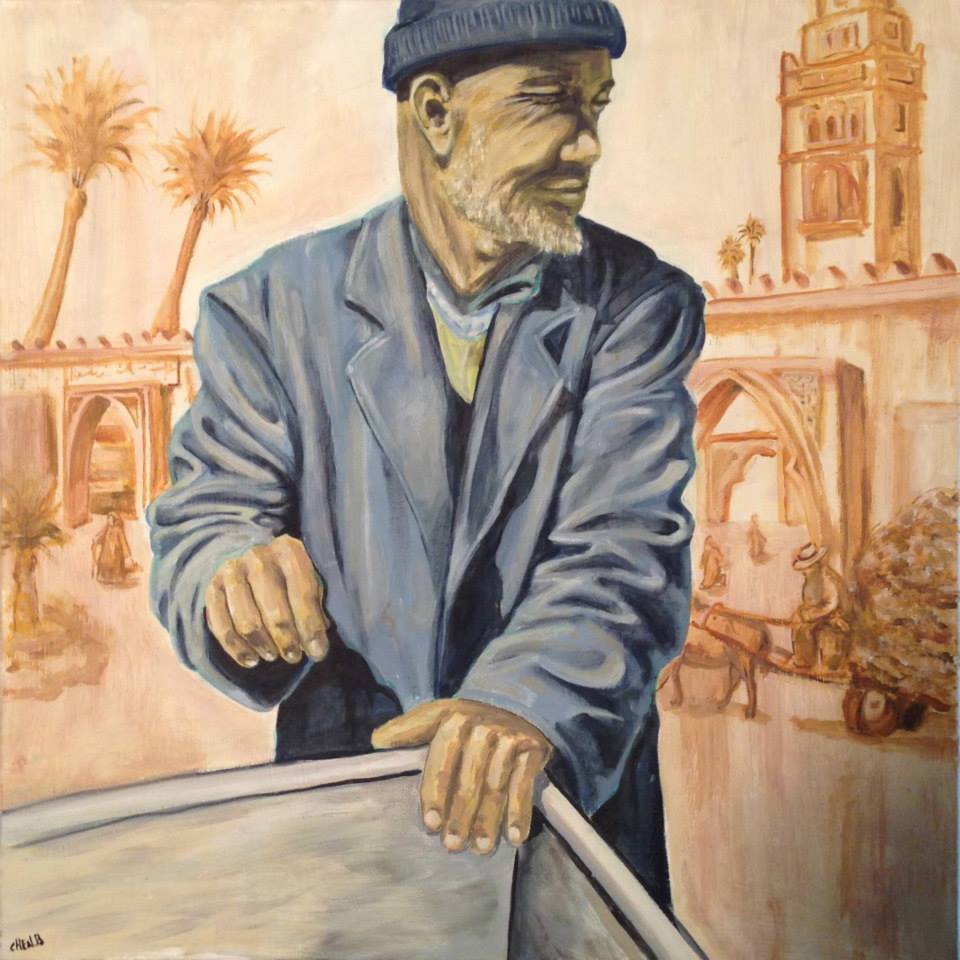
    When ARTiculAction Art Review opened its interview with him, the first question was about exactly that: what a formal training and years of travel did to his evolution as an artist. The oil painting The Fisher Man, which appeared in the same feature, is a good place to see that answer at work.

    The Fisher Man · Oil on canvas · 60×60 cm – View the artwork

    The question

    You have a solid formal training after your studies at the Avni Institute, you nurtured your education at Visual Communication Design Holon. How do these experiences as well as your current travels around the world influence your evolution as an artist? And in particular, how does your substratum inform the way you relate yourself to art making and to the aesthetic problem in general?

    ARTiculAction Art Review – Josh Ryder & Barbara Scott

    In Chen's words

    The experiences I had throughout the world has enhanced the knowledge and technical tools I already acquired at Avni Institute and Holon institute of technology. There, the world of painting revealed itself to me with all its technics that can help me express myself. I got my inspiration from the world, from the people and the places, even from the spices in Morocco, their bright colors, all that gave me a lot of inspiration and I even painted with spices.

    The architecture and the culture in many of the countries I have traveled to pushed me to explore more ways and directions in my paintings.

    I believe the substratum is infinite, with the gathering of elements that forms an artwork, I let it out without protection. It is a quest of inner search that brings out the artwork through the substratum. With the search i crack kind of a mystical code in me.

    From my spiritual travels in India, Mongolia, China, Thailand and more, I found myself exposed to a world of visual spiritual signs which connected me to my emotions and gut feelings.

    I use the tools that I found and learned all over the world for the creation process, for example: I studied Numerology, Reiki, Jewelry, wood crafting and attended courses of enrichment for the internal world, all of these experiences help me express my creations and decide which material I pass on my feelings for the creation.

    Chen Bachar

    About the work

    The Fisher Man shows an older man in a worn blue jacket leaning on the side of a boat, with a minaret and palm trees rising behind him. It is a portrait of a person and of a place at once, the meeting Chen describes between people, architecture and culture.

    The answer also explains the range of the gallery: oil and acrylic paintings, charcoal drawings, digital art and crafts. Jewellery, woodwork and even spices are all materials Chen has learned to work with along the way.

    More from the interview

  • Osnat and the Free Hand: Inside Chen Bachar’s Creative Process

    Osnat and the Free Hand: Inside Chen Bachar’s Creative Process

    What does a painting need before the first line? For Chen Bachar the answer starts long before the canvas: a studio built for inspiration, the right music, the right time and the right materials.

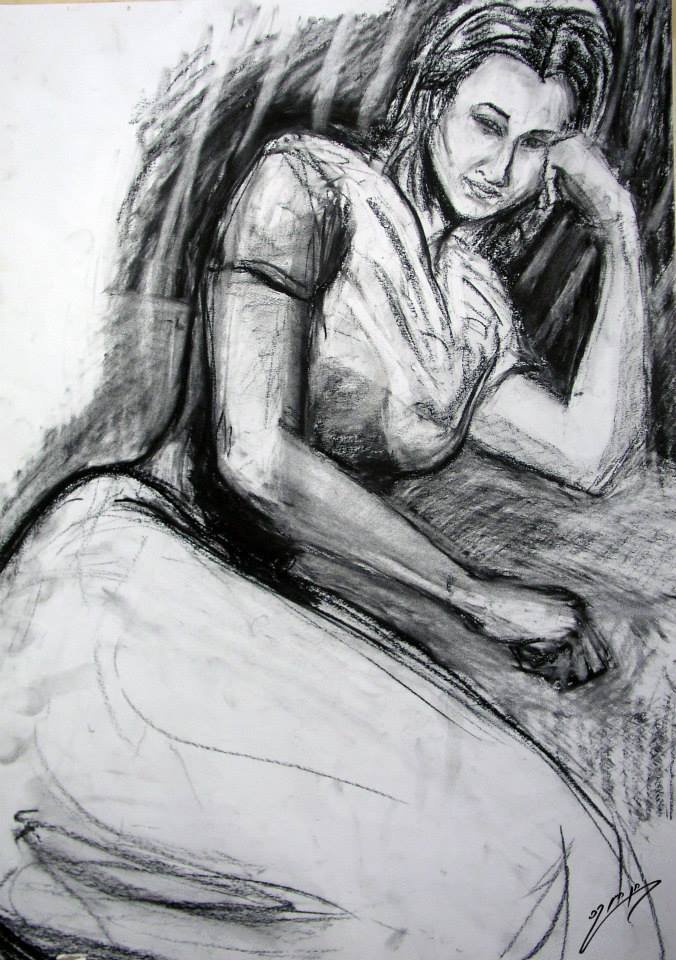
    ARTiculAction Art Review asked him how painting, drawing and digital art work together in his practice. His answer is one of the clearest descriptions he has given of his creative process, and it echoes in charcoal drawings such as Osnat.

    Osnat · Charcoal on paper – View the artwork

    The question

    Your approach condenses a variety of techniques that ranges from Painting and Drawing to Digital Art, that allows you to explore the expressive potential of the media you select. Would you like to tell to our readers something about your process and set up? In particular, have you ever happened to realize that such synergy is the only way to snatch the spirit of the ideas you explore?

    ARTiculAction Art Review – Josh Ryder & Barbara Scott

    In Chen's words

    Today I use a number of techniques which I collected to get to where I want to express myself, using a rugged texture to show difficulty, strong colors to express any internal shout or often optimism of childhood.

    There are several short videos on YouTube in which I revealed the process which I create. A creation is not only the painting itself. It is Very important for me to have the right space, the right time, I built my studio to create a place of inspiration, the right music, with the right materials. Many times the computer is the last thing I touch, giving me a quick and easy solution to get the creation out, there is no doubt that environmental, emotional place, materials and inspirations are a big part of the work process.

    There are many moments when I let my hand run on the canvas without thinking about it, just fill the movement of my hand, something I took from the Japanese calligraphy world, I try to be as accurate as I can be, paint motif, however small, over and over again to get realistic as possible.

    Chen Bachar

    About the work

    Osnat is a charcoal study of a seated woman resting her head on her hand. Charcoal is the most direct of Chen’s media: nothing stands between the movement of the hand and the mark on the paper, which is exactly the freedom he describes borrowing from Japanese calligraphy.

    The other half of the answer, painting a motif again and again until it becomes realistic, is visible in the same drawing, in the folds of the dress and the careful shading of the face.

    Chen’s process videos are on the Videos page.

    More from the interview

  • African Woman: The Story Behind Chen Bachar’s Oil Painting

    African Woman: The Story Behind Chen Bachar’s Oil Painting

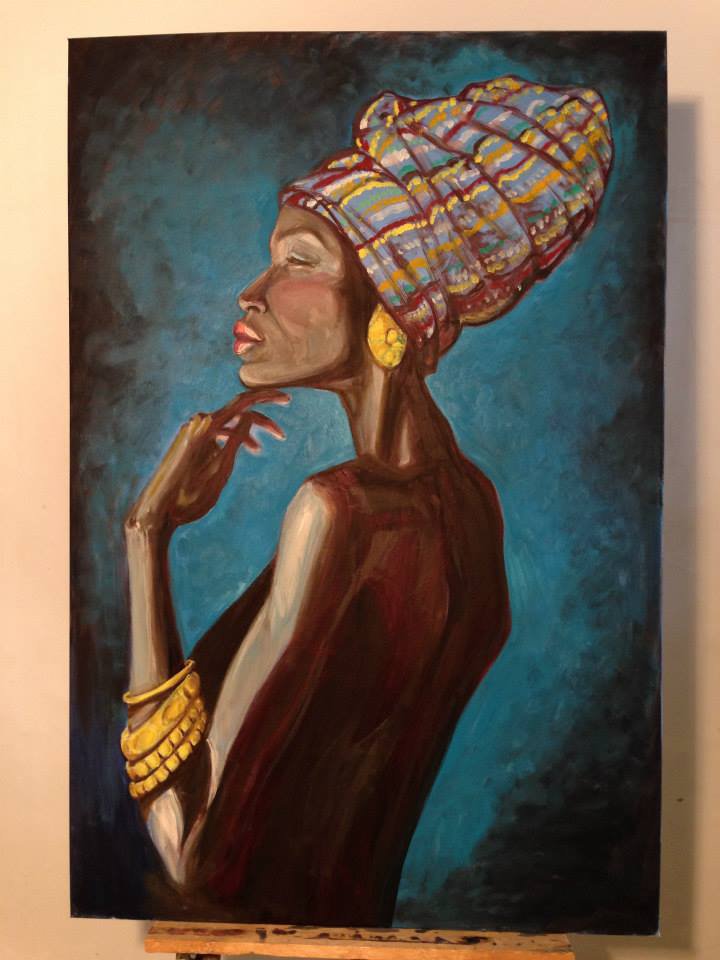
    Some paintings start with an idea. African Woman started with a face. Chen Bachar saw a photograph of her and could not stop looking: who was she, and what had happened to her?

    ARTiculAction Art Review chose African Woman and Gipsy to open its feature on Chen, and asked about the juxtaposition of intense tones that gives his canvases their dynamic, autonomous feel. This is the part of his answer about African Woman (the story of Gipsy is told separately).

    African Woman · Oil on canvas · 120×80 cm – View the artwork

    The question

    What has at once captured our attention of these piece is the way the juxtaposition between intense tones provide your canvass with dynamic and autonomous aesthetic. While walking our readers through the genesis of these pieces, would you shed light to your main source of inspirations?

    ARTiculAction Art Review – Josh Ryder & Barbara Scott

    In Chen's words

    My source of inspiration are people, The moments that people experience. People fascinate me.

    In "African Woman" It was important for me to emphasize the strength of the woman, to show a sexy, soft, gentle woman, with nobility and strength that can capture me, that can make me wonder what happened to her, who is she?

    I took a photo in which she appears, looked at it, and it caused me to be mesmerized for a few days, Until I decided that I need to capture that moment, studying her through painting, trying to reach a gentle body tones, to emphasize her femininity in the most gentle way, and simultaneously her power. The story of her life.

    Chen Bachar

    About the work

    In the painting, a woman in a patterned head wrap is shown in profile against a deep blue ground, her hand raised to her chin, with gold rings at her ear and wrist. The warm, softly modelled skin tones against the cool background are the “gentle body tones” Chen describes reaching for.

    Strength and gentleness side by side, the masculine and the feminine held in balance, is a thread that runs through many of his portraits of women.

    More from the interview

  • Gipsy: Painting a Woman’s Quiet Power

    Gipsy: Painting a Woman’s Quiet Power

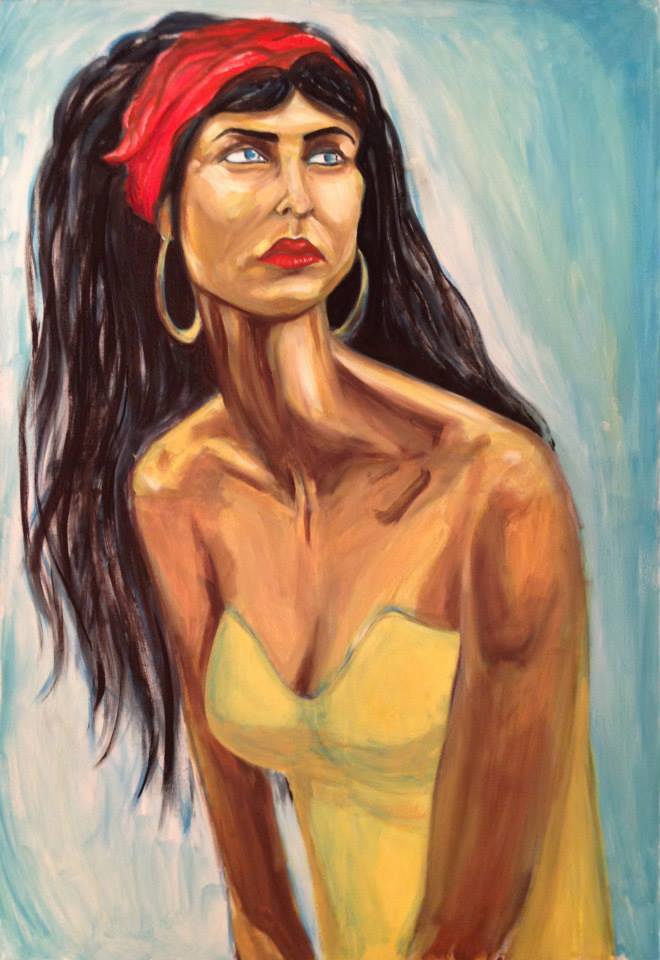
    The editors of ARTiculAction Art Review wrote that Gipsy “seems to communicate an attempt to transform tension to harmony”. Chen Bachar’s answer explains where that balance comes from.

    The question was asked about two paintings together, African Woman and Gipsy. This is the part of his answer about balance, and about the woman in Gipsy.

    Gipsy · Oil on canvas · 120×80 cm – View the artwork

    The question

    In particular, Gipsy seems to communicate an attempt to transform tension to harmony, and it's really captivating. While walking our readers through the genesis of these pieces, would you shed light to your main source of inspirations?

    ARTiculAction Art Review – Josh Ryder & Barbara Scott

    In Chen's words

    By nature I am trying to find the balance between all the parts. Like writing a musical piece, every vessel playing carries some weight. It's the same in painting, there are my extremists, sharp and strong parts, that connects to a very masculine energy, and tenderness, pleasant, delicate feminine side. That, as I claim is my connection to the feminine side, it is very important for me to find balance between the parts, even the colors, also in the lines, to pass on the authentic feeling.

    In "Gipsy" I wanted to emphasize the power of the woman, the power she has in the face of life her incredible patience, her feminine containment against her strengths in her body language, in the colors, the lines and shading.

    Chen Bachar

    About the work

    Gipsy is a large oil portrait of a woman in a red headscarf with dark hair falling over her shoulders, set against loose, open strokes of yellow and blue. Her expression is calm and steady while the background around her moves.

    That contrast is the balance Chen describes: sharp and strong against tender and delicate, held together in one composition.

    More from the interview

  • Thoughts: Between Realism and the Subconscious Line

    Thoughts: Between Realism and the Subconscious Line

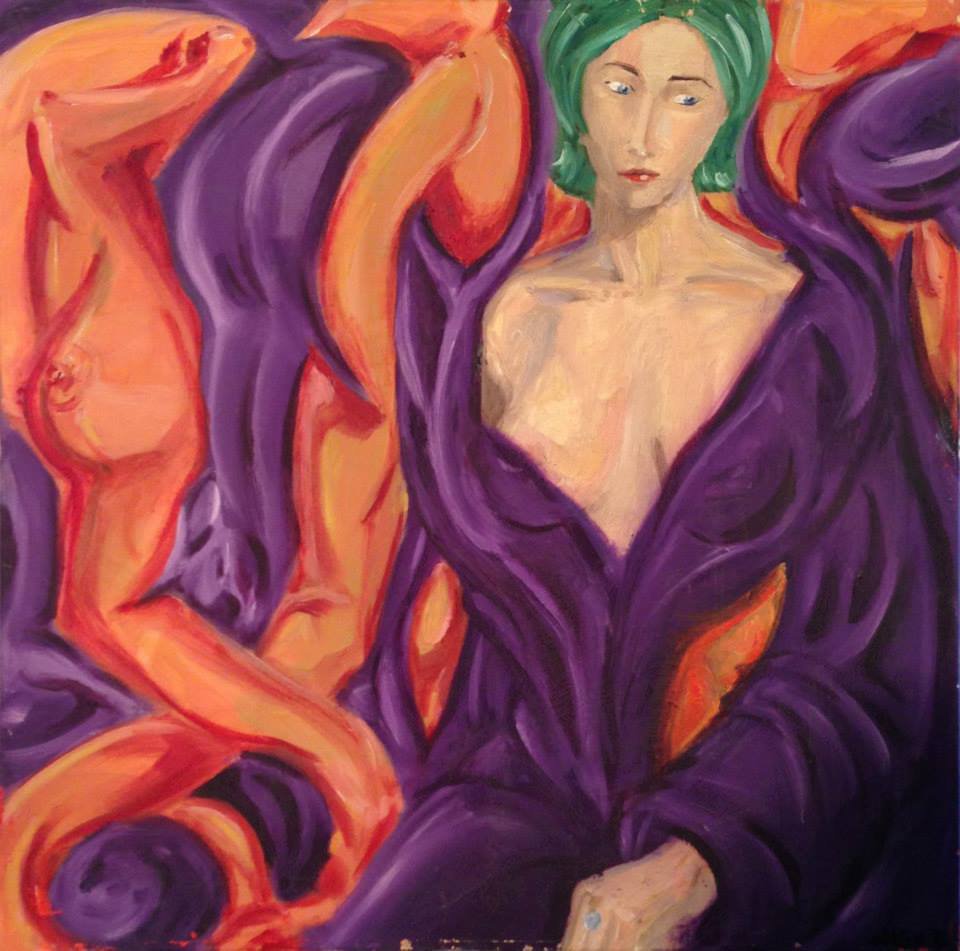
    Many artists move from realism to abstraction over a career. In Thoughts, Chen Bachar did it on a single small canvas, and found the visual language he has worked in ever since.

    ARTiculAction Art Review singled the painting out for the dialogue between colour and texture, and asked how his psychological make-up shapes his palette.

    Thoughts · Oil on canvas · 60×60 cm – View the artwork

    The question

    Another interesting piece of yours that has particularly impressed us is entitled Thoughts: the dialogue established by colors and texture is a crucial part of your style. How much does your own psychological make-up determine the nuances of tones you decide to use in a piece and in particular, how do you develop a painting's texture? Moreover, any comments on your choice of "palette" and how it has changed over time?

    ARTiculAction Art Review – Josh Ryder & Barbara Scott

    In Chen's words

    In the Painting "Thoughts" a quest began to search a unique line that speaks directly from the subconscious. From an output of realism to the abstract. I didn't want a purely abstract painting, I wanted the balance.

    As a realistic character she waited for half a year without a background, then I decided to look for her "thoughts" through the lines I draw on the canvas without desire for realism or perfection, Subconscious to hand. I wanted to illustrate what she goes through with two colors, orange – animality, creativity and sexual power, and the Purple color that is very high spiritually, a color that channels a huge femininity.

    It was there, in the search for my unique painterly language, I found the direction from the collection of intuitive lines, extract elements to contact with the viewer, like her breasts, the eagle, parts of the body, all of them exiting her Clothes, the exterior we wear on our bodies comes out to the world and reflects the sensuality and also the messages that are unclear.

    This painting really started at the end of my studying in Avni, at that time painting a nude model really impressed me, a round and pleasant-looking woman's body, women as something very mysterious in my life, I was curious to get in touch with my feminine side and take out lines that transfer this feeling, lines that transfers thought's not necessarily by text, but by something around you.

    The format I chose was small and square, I wanted to feel safe in a small format, exploring the new language and then turn to large canvases. I had the need for an intimate format, as a part of the work.

    Chen Bachar

    About the work

    Look closely and the painting reads in two layers: a realistically painted woman with green hair, and around her a swirl of intuitive orange and purple lines from which forms emerge, a breast, a bird, parts of a body.

    Two ideas from this answer recur across Chen’s work: colour chosen for its psychological meaning, and the half-realistic, half-abstract balance that later appears in large portraits such as John Lennon and Amy Winehouse.

    More from the interview

  • Childhood: A Rusty Tricycle as a Self-Portrait

    Childhood: A Rusty Tricycle as a Self-Portrait

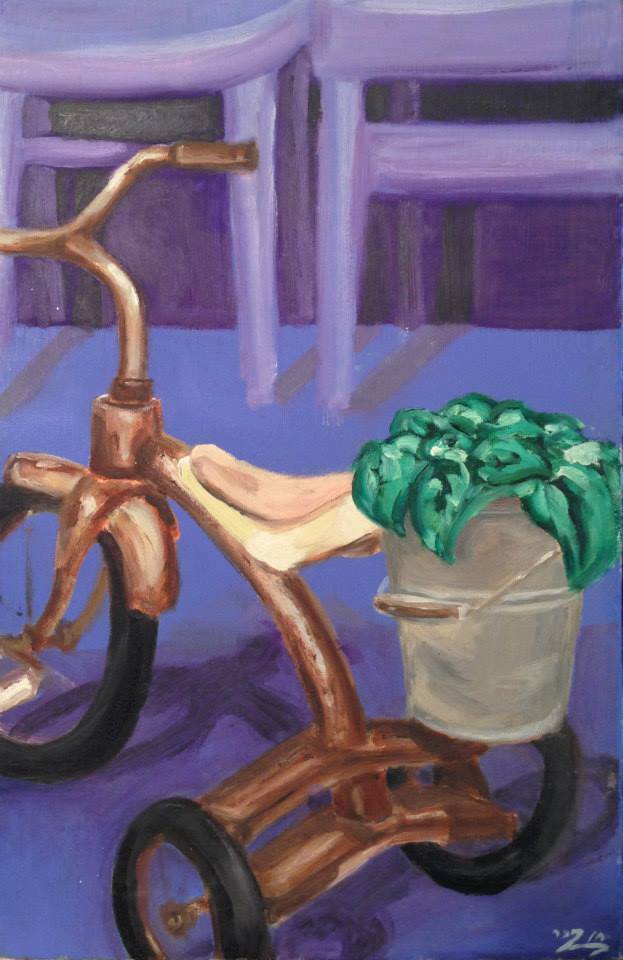
    There is no person in Childhood. There is an old tricycle, and behind it two chairs. Chen Bachar painted himself anyway.

    ARTiculAction Art Review noted that his paintings often avoid an explicit explanation and invite viewers to find their own reading. Then it asked about the role memory plays in his work. The answer is the most personal moment of the interview.

    Childhood · Oil on canvas · 50×30 cm – View the artwork

    The question

    While exhibiting a captivating vibrancy, your pieces sometimes reject an explicit explanatory strategy: rather, in Childhood you seem to invite the viewer to find personal interpretations to the feelings that you convey into your paintings. What is the role of memory in your process? And in particular, do you try to achieve a faithful visual translation of your feelings?

    ARTiculAction Art Review – Josh Ryder & Barbara Scott

    In Chen's words

    The painting "Childhood" has an old tricycle and behind it two different chairs. The tricycle, in my feeling at that time, felt like me. Something of Child, of the happy childhood that ended a long time ago.

    During that period I connected to my inner child, especially the wounded child who did not get the correct listening from his parents. They did not understand I am an artist and pushed me toward computers. This is the stage of adolescence where I saw myself indeed abandoned and rusty yet with the joy of life that Tricycle is giving, the memories that cannot be taken, optimism and understanding that my life is not the same as my parents.

    The tricycle as a metaphor of my childhood, truly broken and sad, but still emphasizes that it holds blossoming optimism, the blossoming of life when you understand what you need to learn and take in life. Understand that you are stronger than you thought, always remain optimistic and look at life differently.

    The chairs standing there and "looking" at the tricycle do not transfer emotion and connection, just as I felt many times during my childhood. I like this painting because it gives me both the joy and sadness. the playfulness and toughness, the monochromes of memories.

    Chen Bachar

    About the work

    Childhood is a small oil painting, and its meaning sits in a few objects: a child’s tricycle, rust, two empty chairs. It is a clear example of how Chen turns a still life into a portrait of a feeling.

    The story behind it, a boy pushed toward computers, links to the end of the interview, where Chen tells how he went from computer programmer to painter.

    More from the interview

  • The Clown and the Question: What Is Art For Today?

    The Clown and the Question: What Is Art For Today?

    The interviewers quoted Gerhard Richter: “my concern is never art, but always what art can be used for.” Then they asked Chen Bachar what he thinks art is for today.

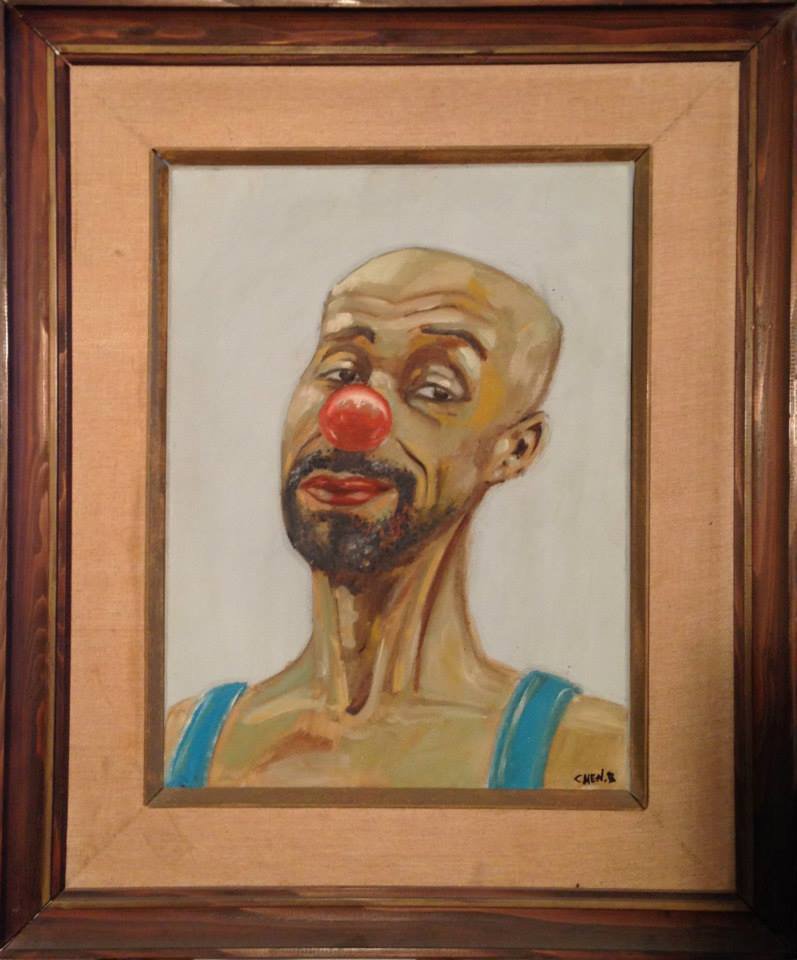
    His answer ran beside The Clown, a small oil portrait that does what he describes: it stops you, and it does not leave you indifferent.

    The Clown · Oil on canvas · 40×30 cm – View the artwork

    The question

    As you have remarked in your artist's statement, you use human universal channel to enter peace and connect with great love. As Gerhard Richter once remarked, "my concern is never art, but always what art can be used for": what is your opinion about the functional aspect of Art in the contemporary age?

    ARTiculAction Art Review – Josh Ryder & Barbara Scott

    In Chen's words

    Someone said that art is the soul of our society, I do not remember who said it, but I believe it with all my heart. Art is not valued by society today in a sensible way. I see a world where those who let out their soul and expose it to criticism are people who should be most appreciated. What does not happen now for the most part.

    I appreciate all the kind of art that does not come to harm the world or its viewers. It's no problem to shock the audience, I think it is a real art if it makes you stop, wonder, do, change something in yourself, that excite you to tears, that connects you to other places in your soul, art does not leave you indifferent and doesn't hurt you.

    Art sends a message even if it is abstract, I believe that art should be communicative. Art that transfer's a sense of authenticity. The constant search of artists to leave a message, or mark in the world will always be there. I am in favor of some more searching, experimenting, mind opening of new inner and outer worlds. To Excite, that is why I am in this world – excite and excitement.

    I highly admire Contemporary Art and as the digital era evolves I'm attracted more and more towards past techniques. For example, work in tempera, that really brought me back to past lives how they use to cook and prepare the colors used, it was very exciting for me.

    Chen Bachar

    About the work

    The Clown is a close-up of a man with a red clown nose and blue suspenders, his gaze turned away from the viewer. The costume says comedy and the face says something else. That gap is the kind of feeling Chen wants art to leave behind.

    His mention of tempera is worth noticing: an artist who also works digitally, choosing to mix pigments the way painters did centuries ago. Some of those tempera works are in the gallery.

    More from the interview

  • Steve Jobs: Why the Portrait Is Split Across Two Canvases

    Steve Jobs: Why the Portrait Is Split Across Two Canvases

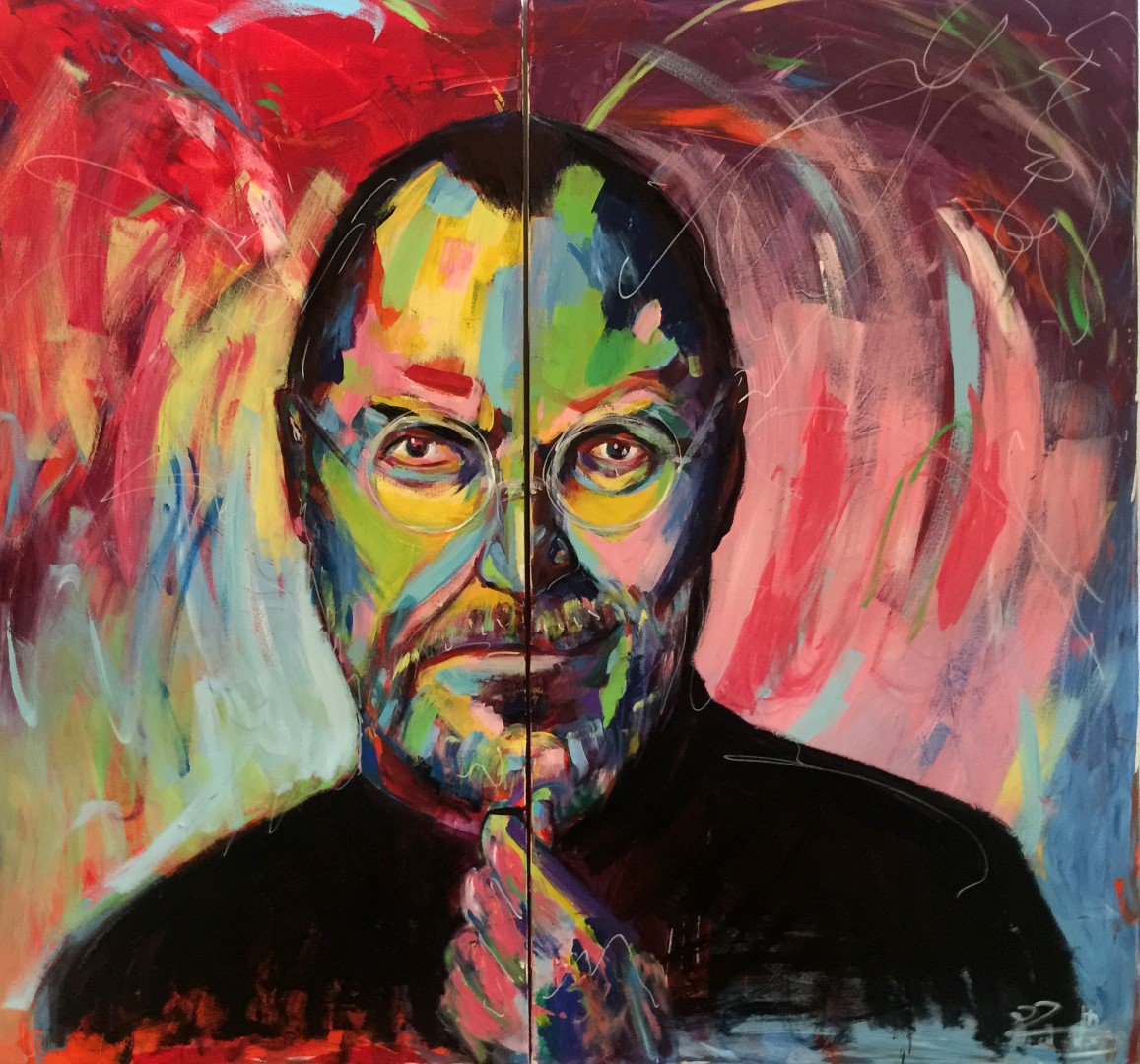
    Chen Bachar’s portrait of Steve Jobs is two paintings. A line runs down the middle of the face, and it is there on purpose.

    ARTiculAction Art Review asked whether a creative process can be disconnected from direct experience, given that Chen never met the famous people he paints. His answer starts with Jobs.

    Steve Jobs · Acrylic on canvas · 160×170 cm – View the artwork

    The question

    You seem to draw from universal imagery and your works entitled JOHN LENNON and STEVE JOBS give a permanence to the intrinsic ephemeral nature of the characters you capture through your images. So we would take this occasion to ask you if in your opinion personal experience is an absolutely indispensable part of a creative process… Do you think that a creative process could be disconnected from direct experience?

    ARTiculAction Art Review – Josh Ryder & Barbara Scott

    In Chen's words

    In my work on "John Lennon" and "Steve Jobs" I had a different journey. "Steve Jobs" is divided into two Canvases and for a good reason. Steve Jobs was a visionary and a kind of dictator, he also changed the world with creativity and also was a person who was hard to work with, so I divided the work. However, I left the piece colorful and optimistic because I appreciate him very much, and it is important to emphasize.

    I have no personal acquaintance with the illustrated, yet I have much appreciation for them and their work led me to research about them, I read the book about Steve Jobs before approaching to paint the character.

    I'm sure that without connection to the creation and its origins I cannot paint an authentic creation that I'm in there.

    Chen Bachar

    About the work

    The portrait is painted in acrylic across two canvases, built from bright planes of colour: magenta, turquoise, yellow and green against a dark ground. The split in the middle is the contradiction Chen describes; the colour is his appreciation.

    Reading the biography before painting is typical of how he approaches a famous face. He did the same with John Lennon.

    More from the interview

  • John Lennon: A Pop-Art Portrait Built on Colour Psychology

    John Lennon: A Pop-Art Portrait Built on Colour Psychology

    Chen Bachar never met John Lennon. Before painting him, he watched the documentary about the Beatles to understand the man behind the round glasses.

    In ARTiculAction Art Review he explained why that research matters, and why no portrait is only about its subject. This is the second half of his answer; the first is about Steve Jobs.

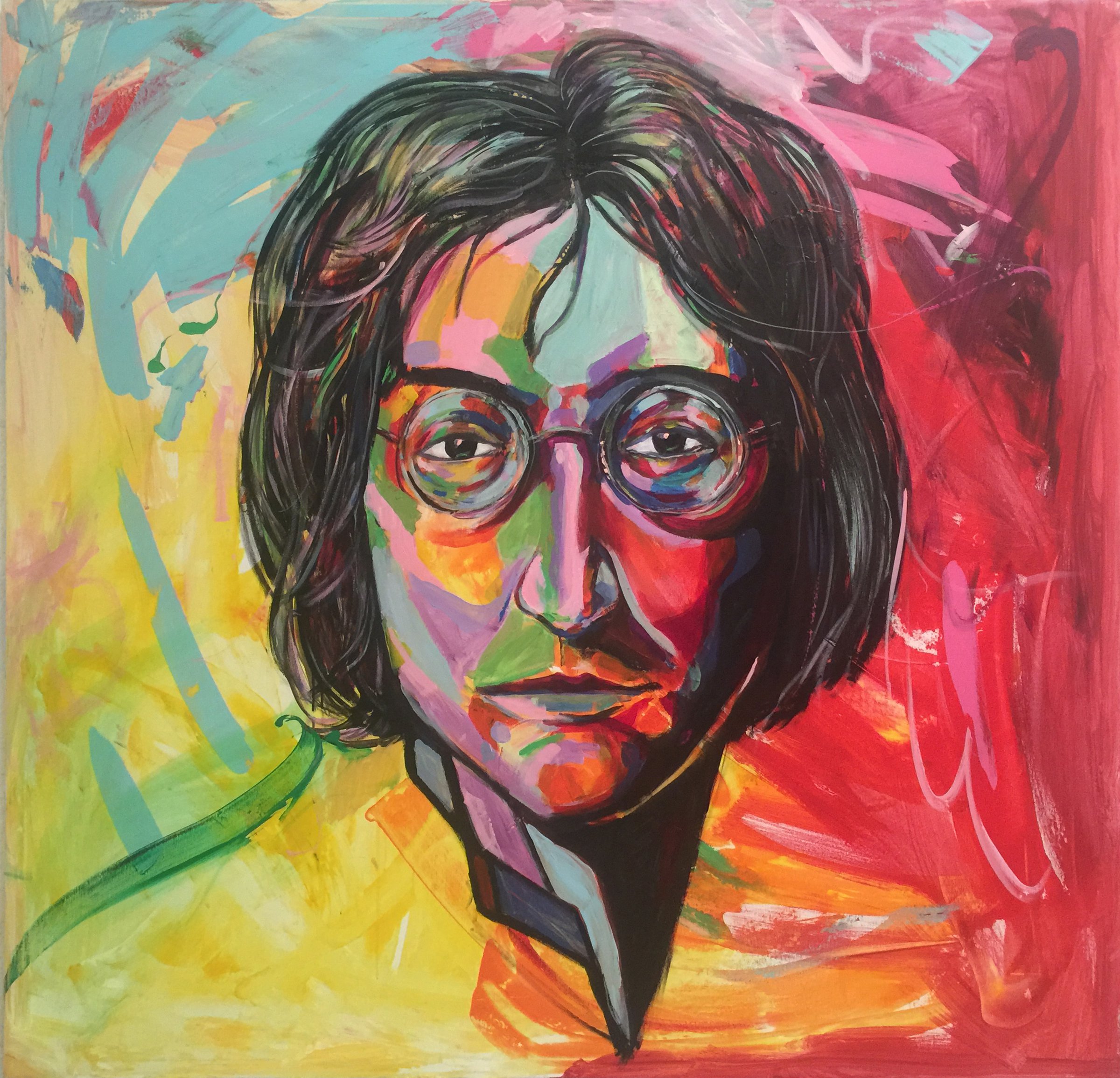
    John Lennon · Acrylic on canvas · 140×140 cm – View the artwork

    The question

    You seem to draw from universal imagery and your works entitled JOHN LENNON and STEVE JOBS give a permanence to the intrinsic ephemeral nature of the characters you capture through your images. Do you think that a creative process could be disconnected from direct experience?

    ARTiculAction Art Review – Josh Ryder & Barbara Scott

    In Chen's words

    The colorful Pop-Arty lines given to the painting of "John Lennon" were mostly to capture the being of the person I painted, the look, his character. I used bright colors and the use of color psychology to transfer my feelings towards the illustrated.

    …and I watched the documentary about the Beatles and John to understand him. I'm sure that without connection to the creation and its origins I cannot paint an authentic creation that I'm in there. In each painting I create, I put a part of me in it somewhere.

    Using a lot of lines that are not realistic, and also the Redirection to paint abstract, comes from intuition and spreading my catharsis that related to the person. You cannot be disconnected from your artwork in my opinion, the connection is even, dare to say, mostly you.

    I picture myself in a different form, what I put on the canvas are values, feelings and my understanding of the world. This is part of my inner journey. It's like in psychology, where your character could be examined by a simple drawing, the same way you can understand the inner journey I go through that occurred during painting.

    Chen Bachar

    About the work

    The large square acrylic shows Lennon’s face, round glasses and long hair in loose strokes of pink, red, yellow and blue. The likeness is clear, but the colour does not describe skin. It describes how the painter feels about the person.

    The same approach shapes the companion portraits of Steve Jobs and Amy Winehouse.

    More from the interview