
A good painting hung too high, crooked or in harsh sun loses much of its effect. Hanging it well takes a tape measure, a level, the right hardware and about half an hour.
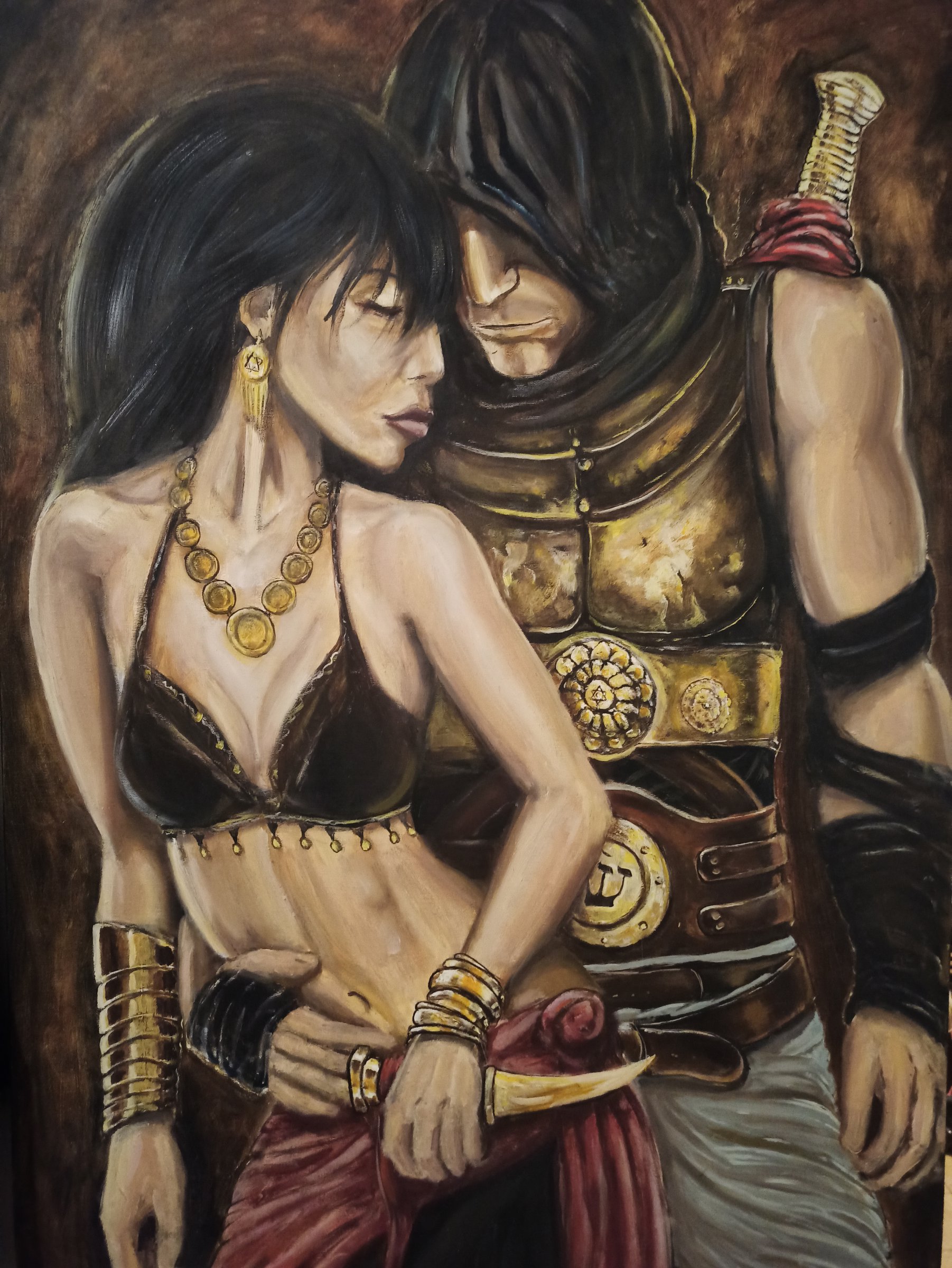
This guide walks through the standard measurements galleries use, how to secure a heavy canvas, and where light helps or harms. As an example we use Macabi, an oil on canvas by Chen Bachar measuring 120 × 80 cm.
Macabi · Oil on canvas · 120×80 cm – View the artwork
The right height: centre at eye level
Most galleries and museums hang works so that the centre of the painting sits about 145–150 cm (57–60 in) from the floor. That is roughly average eye level for a standing adult, and it keeps a room consistent.
To find the hook position, measure to the centre point, then add half the painting’s height and subtract the distance from the top of the canvas to the tightened wire or hanging point. For an 80 cm tall canvas, the top edge will sit about 40 cm above the centre line.
In rooms where people mostly sit, such as dining rooms, you can hang a little lower. The goal is that the eye meets the painting comfortably, not that you look up at it.
Above a sofa or sideboard
When a painting hangs above furniture, the furniture becomes the reference point. Leave about 20–25 cm (8–10 in) between the top of the sofa back and the bottom edge of the painting.
Less than that and heads may knock the frame; much more and the painting floats away from the furniture and the two stop reading as one group. Centre the work on the sofa, not on the wall, if the two are not aligned.
For guidance on choosing the right width for that wall, see https://chenbachar.art/?p=2122.
Hardware for heavy canvases
A large oil on a stretcher, such as a 120 × 80 cm canvas, should not hang on a single nail. Use two hooks or screws spaced well apart, which spreads the weight and keeps the painting level over time.
Match the fixing to the wall. Drywall needs proper anchors or picture hooks rated for the weight; concrete and block walls need a drill and wall plugs. Always choose hardware rated above the actual weight of the work.
On the back of the painting, D-rings screwed into the stretcher bars are more secure than a loose wire. Check with a spirit level before the final tightening, and add small bumpers at the bottom corners to protect the wall and keep the canvas straight.
Light, sun and climate
Direct sunlight is the main enemy of paintings. UV light fades pigments and can make varnish yellow over the years, so avoid walls that get strong sun for long periods.
Also avoid hanging above radiators, heaters, fireplaces or air-conditioning vents, and keep originals out of bathrooms and steamy kitchens. Sudden changes in heat and humidity make canvas expand and contract.
For artificial light, warm LED picture lights or adjustable ceiling spots aimed at about 30 degrees reduce glare on the surface. For more on looking after an oil painting, read https://chenbachar.art/?p=2134.
Hanging a group of paintings
When hanging several works together, lay them out on the floor first, or cut paper templates and tape them to the wall. This lets you try arrangements without making extra holes.
Keep a common centre line at the same 145–150 cm height for the group as a whole, and use even spacing of about 5–8 cm between works. A larger piece anchoring smaller ones around it usually looks more balanced than equal sizes scattered at random.
If you are planning a wall around a specific work, you can see sizes and room mockups on each artwork page in the https://chenbachar.art/gallery/.
More articles
- Original vs Print vs Commission: Which Artwork Is Right for You?
- How to Care for Oil Paintings: A Practical Guide for Collectors
- Why Buy Art from the Artist: What a Living Painter Gives You
- Art as a Gift: How to Choose a Painting Someone Will Love
- Becoming an Artist Later in Life: Programmer, Designer, Painter
- Venice Oil Painting: Light on Water in "Venice Window"