
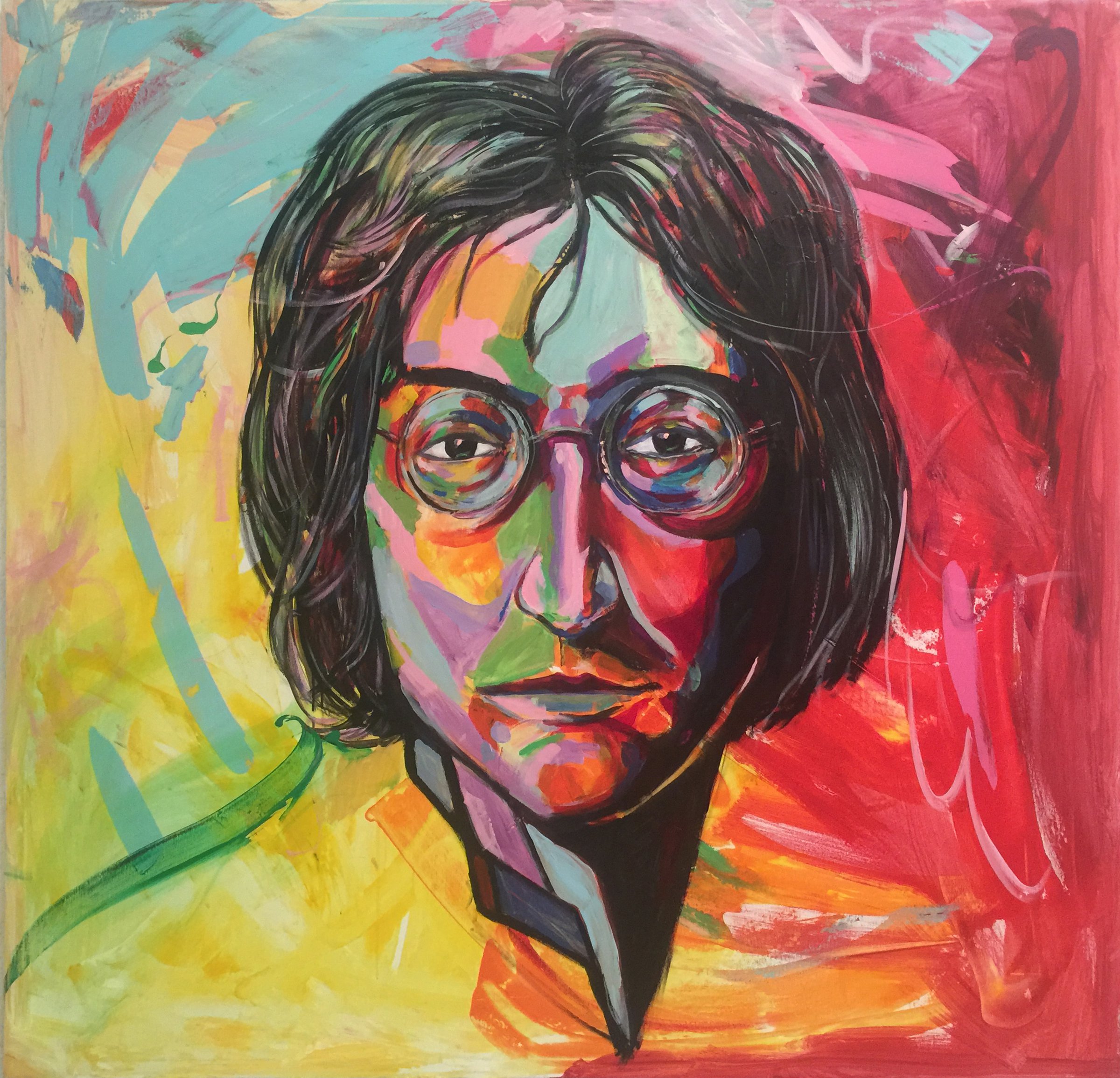
Oil or acrylic? Both are used by professional painters, and both can last for generations when the work is made well. The real differences are practical, and they also show up in the mood of the finished painting.
Chen Bachar works in both. His large acrylic portraits include John Lennon and Amy Winehouse (both 140×140 cm) and Steve Jobs (160×170 cm). His oils include African Woman and Gipsy (both 120×80 cm). Here is how the two media compare, and what that means for painters and for people choosing a painting.
John Lennon · Acrylic on canvas · 140×140 cm – View the artwork
Drying time: minutes versus days
Acrylic is a water-based paint that dries as the water evaporates. A thin layer can be dry to the touch in minutes, which lets a painter build layer over layer in a single session and make fast, decisive changes.
Oil paint does not dry by evaporation but by slowly reacting with the air. A layer may need days to be touch-dry and much longer to cure fully. That slowness is the point: colours can be blended wet into wet, edges softened, and passages reworked the next day.
Colour and surface
Acrylic colour tends to dry slightly darker than it looks when wet, because the binder is milky when wet and clear when dry. The surface is usually even and can range from matte to satin. It handles flat areas, crisp edges and bright, graphic colour very well, which is why it is so common in pop-art inspired work.
Oil keeps its colour more consistently as it dries and has a natural depth and saturation. Thin transparent layers, called glazes, let light pass through and bounce back, giving skin and shadow a soft glow that is hard to match in acrylic. Chen has described the colourful, pop-art lines of John Lennon, a style that suits acrylic’s clean, bright surface; you can read more in the John Lennon pop-art portrait.
My choice of materials depends on the message I want to pass on.
Chen Bachar, ARTiculAction Art Review
Texture and layering
Both paints can be used thinly or thickly. Thick oil, known as impasto, holds the mark of the brush or knife. Acrylic can be thickened with mediums and pastes and still dry quickly. Chen has said he uses rugged texture to show difficulty, and that some of his paintings have three layers while others have fifteen.
Oil layering follows the classic “fat over lean” rule: each layer should be a little more flexible than the one beneath it, so the painting does not crack as it ages. Acrylic layers can be stacked without that rule, which makes it more forgiving for fast, experimental work.
Durability and care
Oil has a track record of centuries; many of the paintings in the world’s museums are oils. Acrylic is younger, dating from the mid-twentieth century, but is flexible and stable when made with good materials. Both last best away from direct sunlight, damp walls and heat sources such as radiators.
Oil paintings may yellow slightly if kept in the dark for long periods, and both kinds benefit from gentle dusting rather than cleaning products. For practical advice, see how to care for oil paintings.
Mood: why an artist reaches for one or the other
In the end the choice is not only technical. Chen Bachar puts it simply: “if I want a painting hotter I tend to choose oil paints”. The slow, deep, warm quality of oil suits his figurative works of women, while acrylic carries the bright, direct energy of his large portraits of public figures.
For someone choosing a painting, the medium matters less than the feeling the work gives in the room. It helps to compare the two side by side: browse the acrylic paintings and the oil paintings and notice which surfaces draw you closer.
More articles
- Painting from Photographs Without Copying Them
- Color Psychology in Art: What Colour Does in a Portrait
- Gesture Drawing and the Free Hand: What Calligraphy Teaches
- Blind Contour Drawing: What It Is and How to Try It
- Spiritual Art: How Meditation and Reiki Shape Chen Bachar's Studio
- Painting Women: Why Chen Bachar Returns to the Feminine