Peleh — When Art Becomes a Place
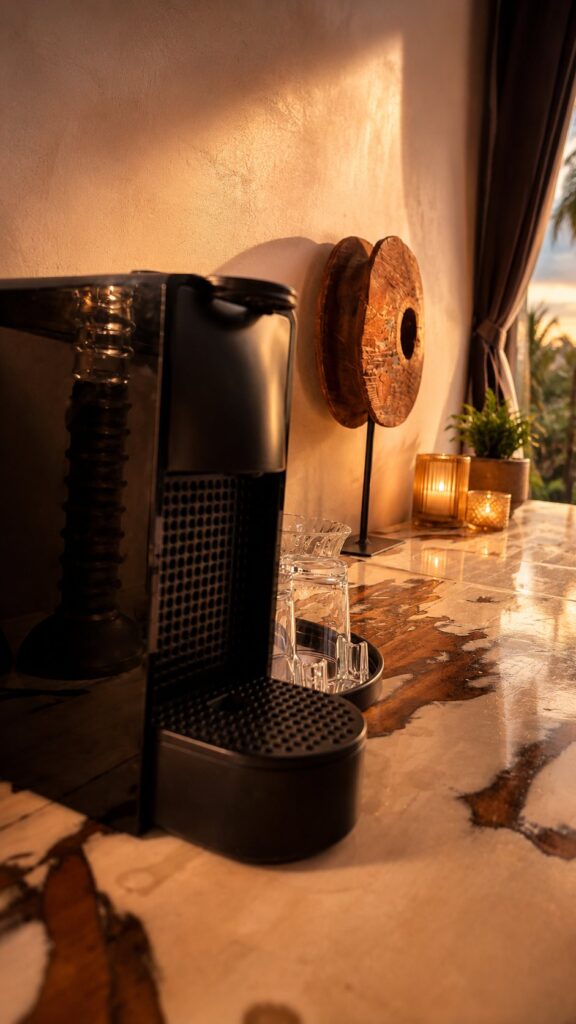
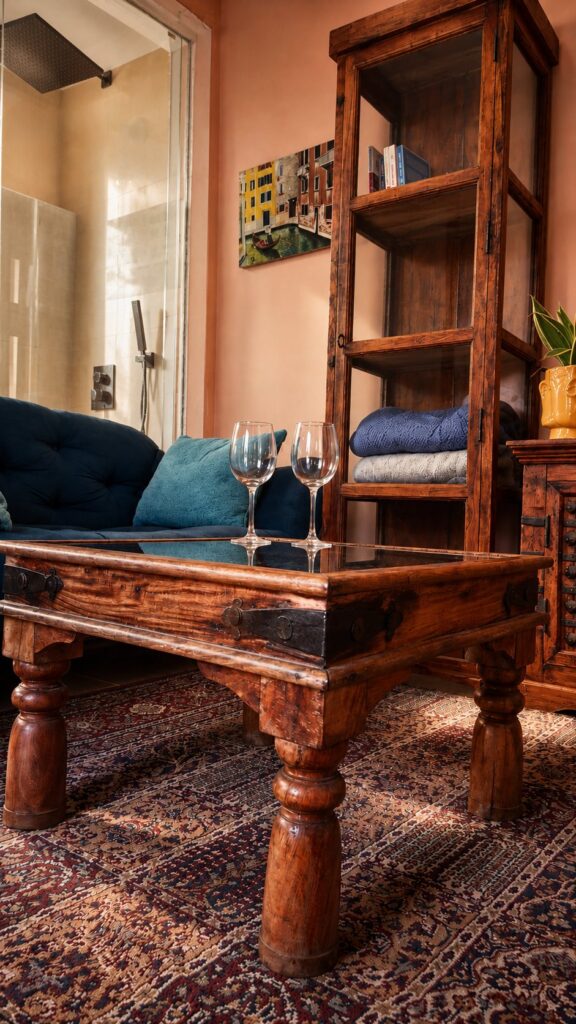
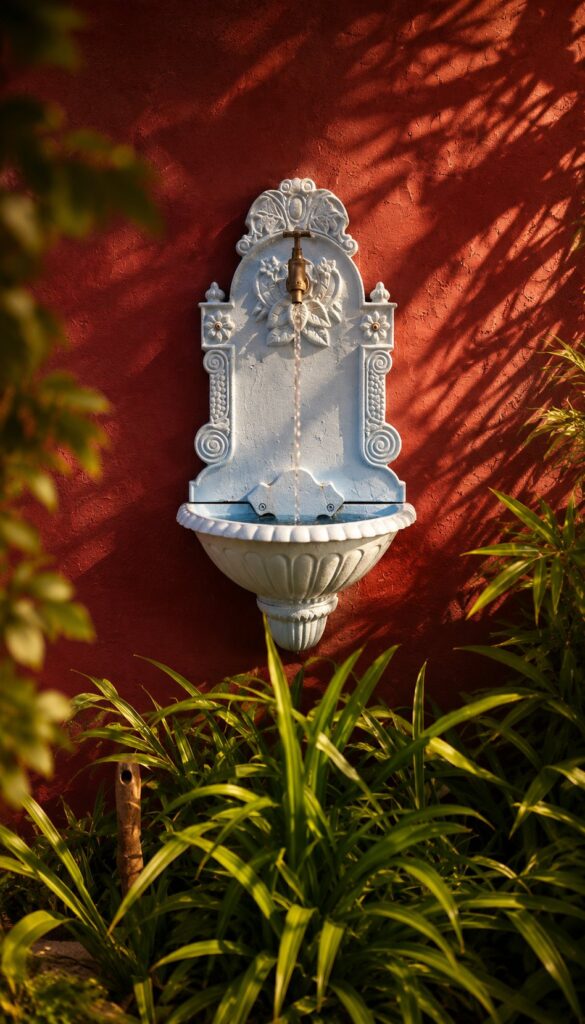
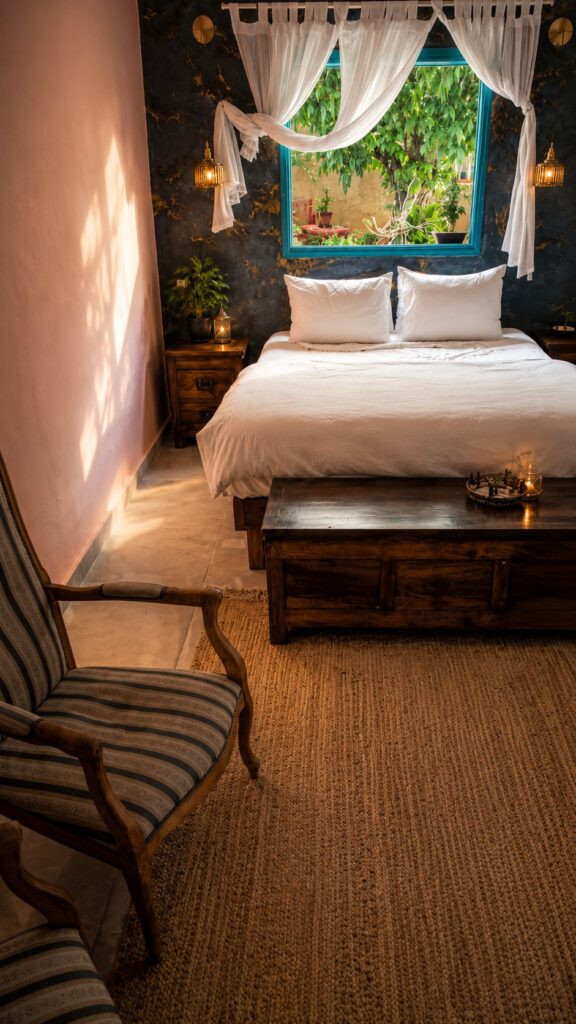
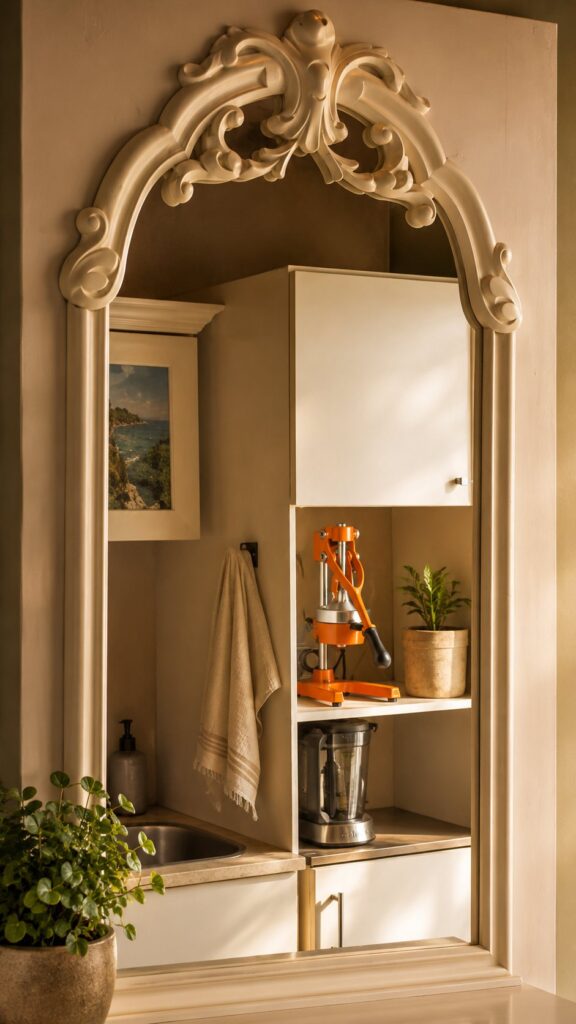
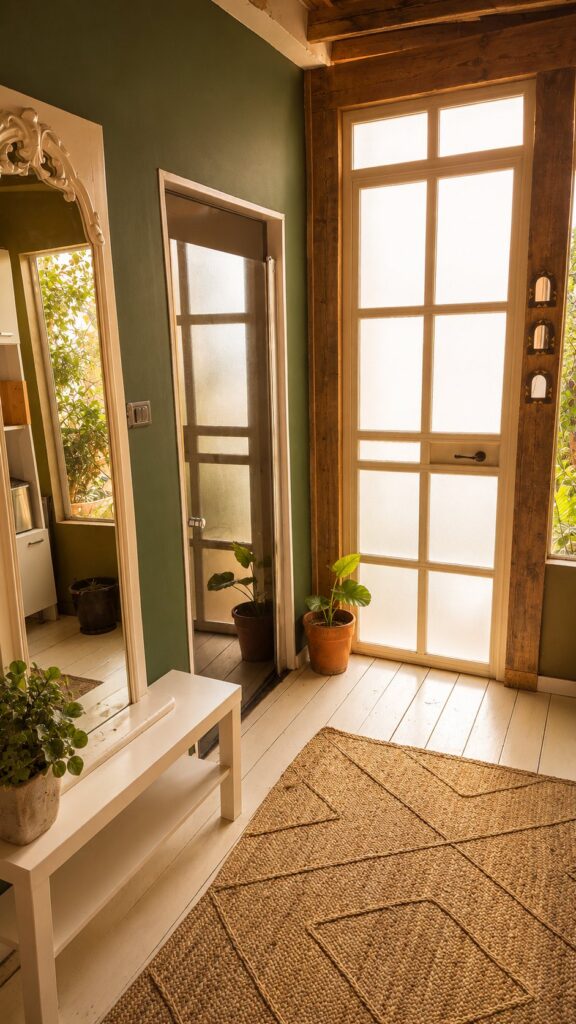
Peleh is much more than a guest retreat. It is a living work of art, born from my love of colour, material, ancient cultures and architecture with a soul. In creating it I brought together antique pieces, wood carvings, natural textures and rich colour, and built a space where every detail tells a story. Inspired by faraway worlds, from Marrakesh to Kashmir, I turned the space into a three-dimensional composition of light, water, nature and emotion. Peleh is my personal expression of the bond between art and life — a work you don’t just look at, but step into, feel and live inside.
Peleh — When Art Becomes a Place
By Chen Haim Bachar | Artist, Designer and Creator
Some works of art hang on a wall. Some stand in a space. And some you can simply walk into, sit inside, breathe in, and feel that you have arrived in another world.
Peleh is one of my most personal and complete works. Not a painting, not a sculpture, not a building in the usual sense, but an entire place born from a passion for art, for aesthetics, for faraway cultures and for the connection between people and their surroundings.
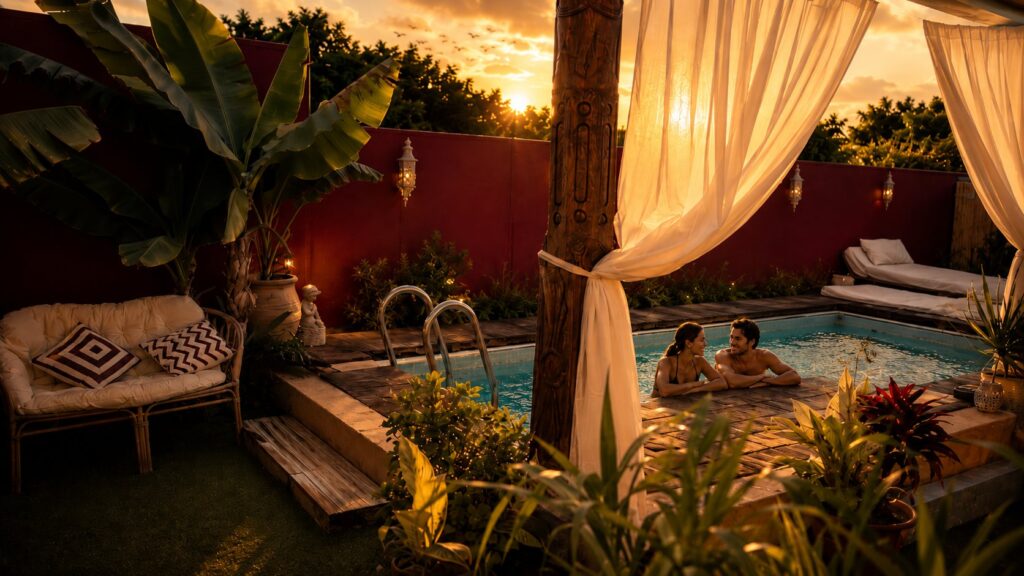
Peleh is an intimate guest retreat for couples in the Caesarea area. But for me, long before it is a place to stay, it is a living artistic space. A multi-sensory work in which every wall, door, column, colour, texture and ray of light is part of a larger story.
Creating a place with a soul
For more than two decades I have worked in art, design and building visual identities. Over the years I have learned that what matters most in a work is not necessarily what you see, but what you feel.
When I set out to design Peleh, I didn’t want to create just another beautiful place. I wanted to create a feeling.
A place that lets you leave behind, for a moment, the familiar, the everyday, the noise and the fast pace, and enter a space where time moves differently.
I wanted whoever walks into Peleh to feel they have arrived somewhere hard to put into words. A place with something of Morocco, something of India, something of the Mediterranean, and above all something that belongs to no particular place.
A place that is a world of its own.
Between Marrakesh and Kashmir — a journey between cultures
One of my main sources of inspiration for Peleh is a love of ancient cultures, traditional architecture and craftsmanship.
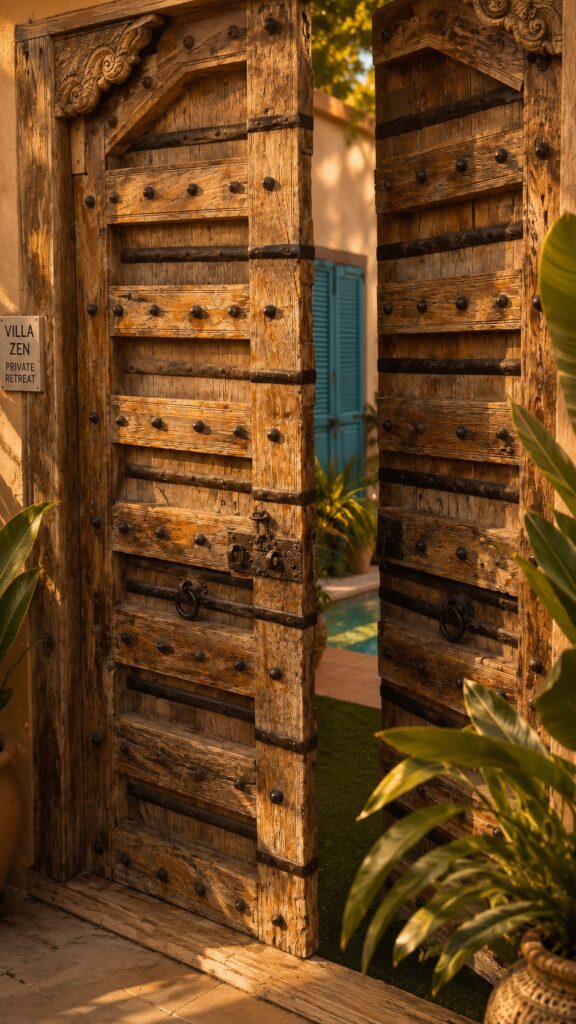
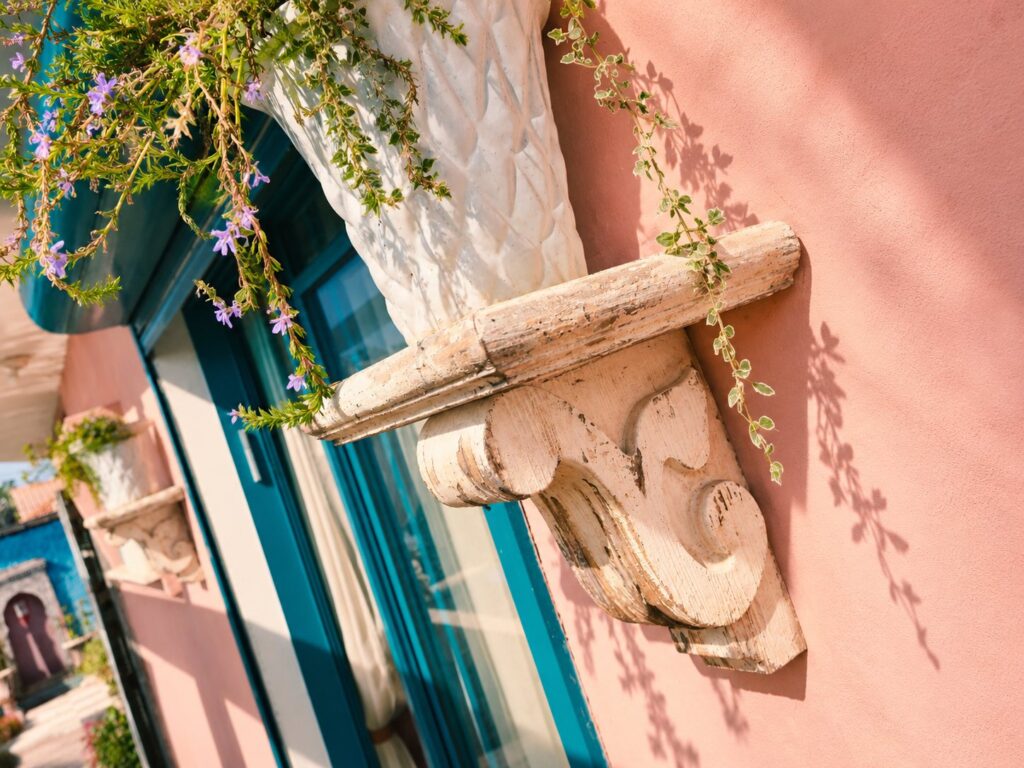
I have always been drawn to places where time leaves its marks. To old wooden doors, worn stone, oxidised iron, deep colours and objects that carry memories with them.
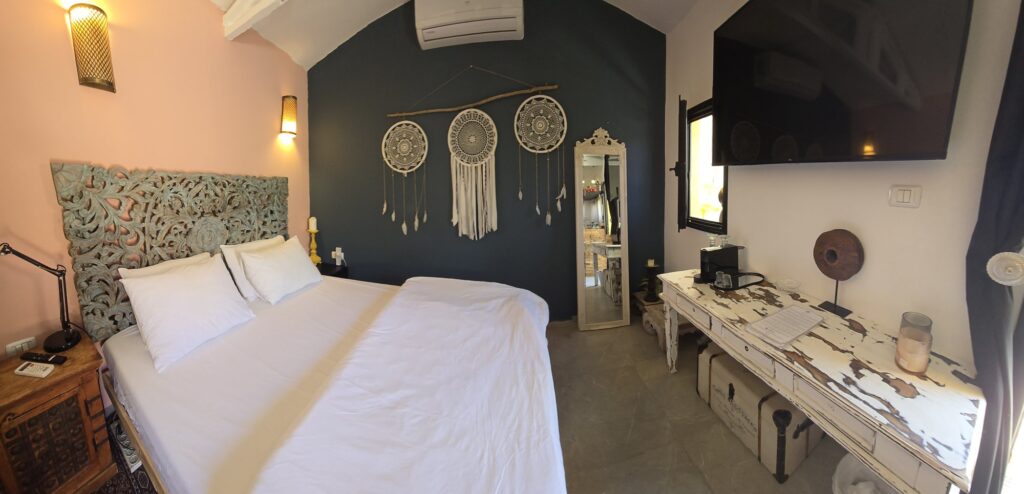
Peleh’s two suites, Marrakesh and Kashmir, express two worlds of inspiration.
Marrakesh brings the warmth, the colour, the material richness and the intimacy of North Africa.
Kashmir draws on the East, on worlds of textiles, carving, handwork, quiet and spirituality.
I didn’t try to recreate a geographic place. I tried to translate the feelings these cultures stir in me into a new visual and artistic language.
This is not a stage set. It is a meeting of memories, imagination and material.
Material with a history
One of the things that mattered most to me in designing Peleh was using pieces that have a past.
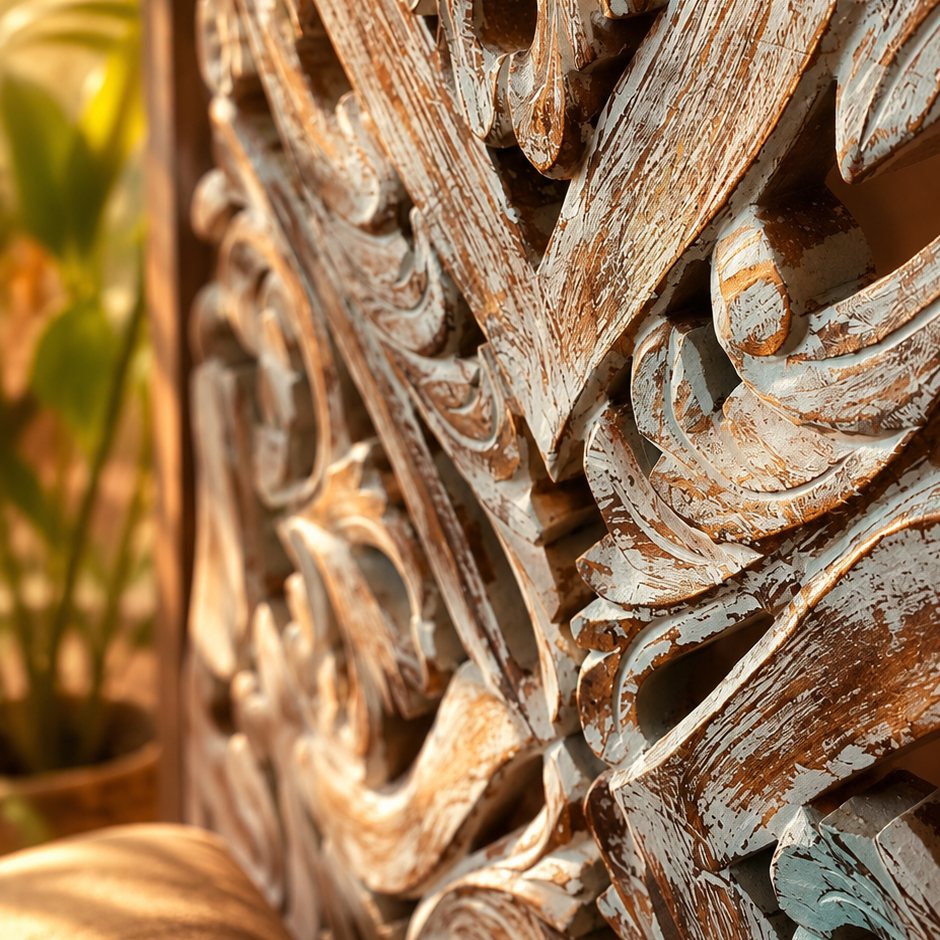
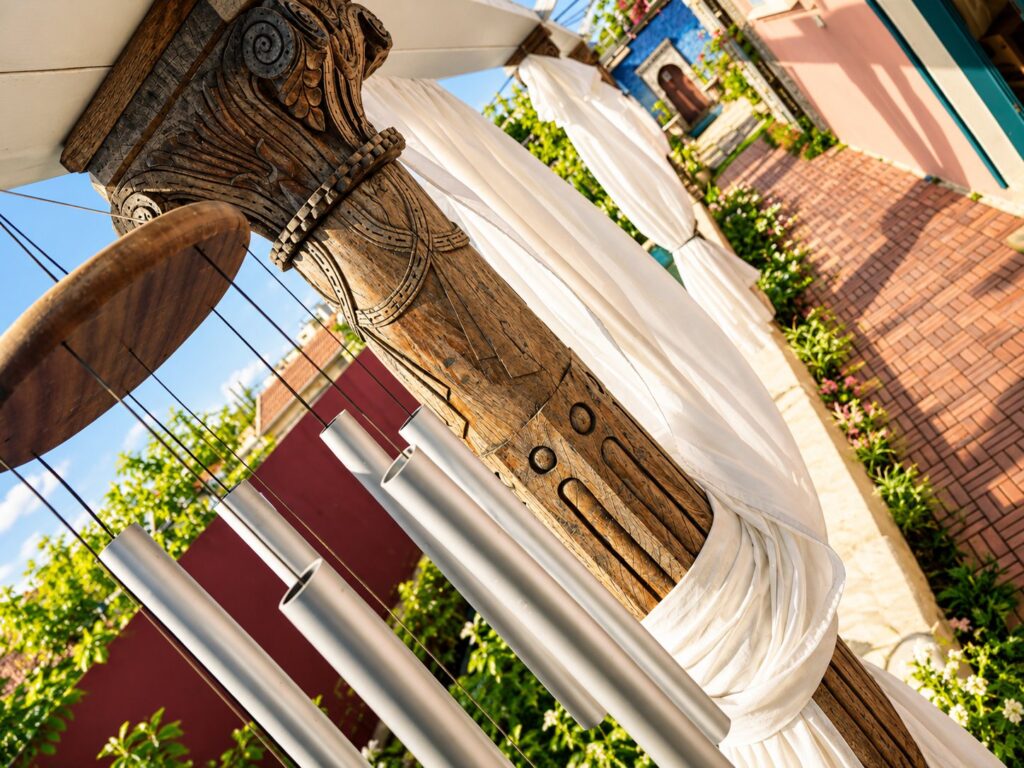
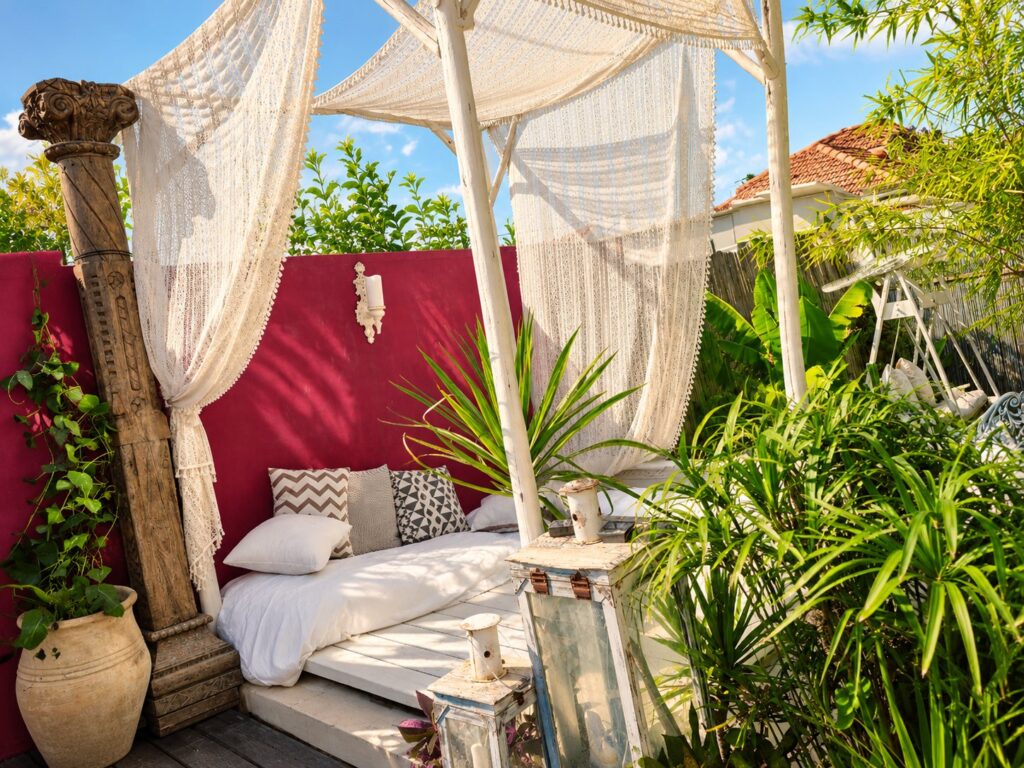
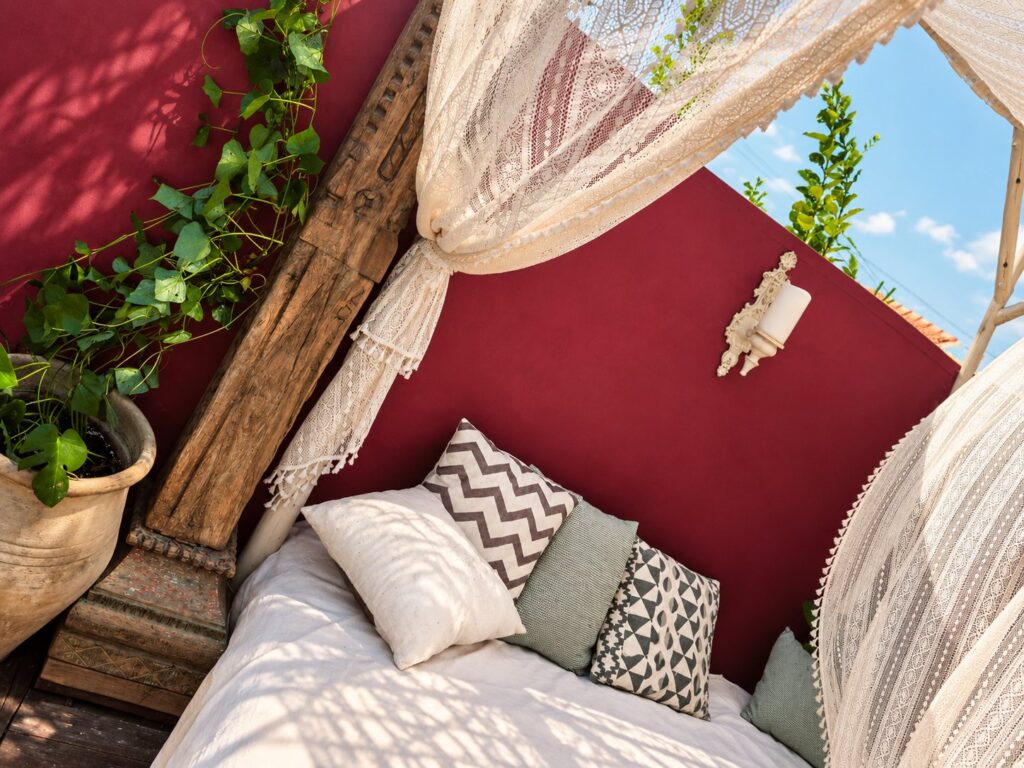
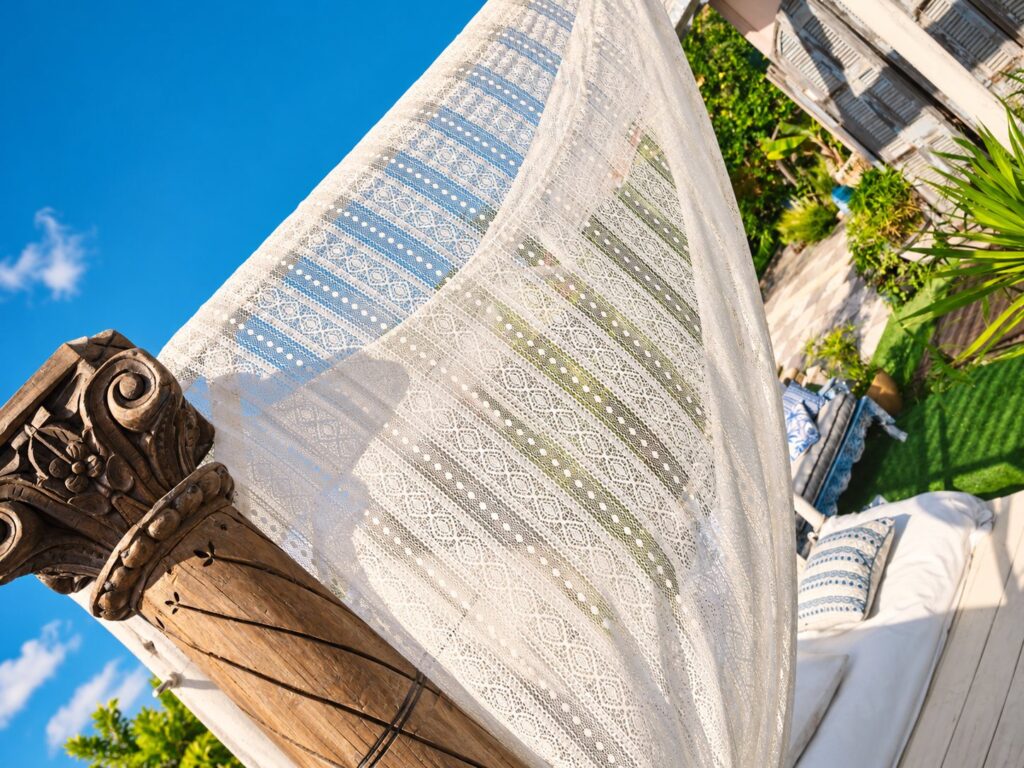
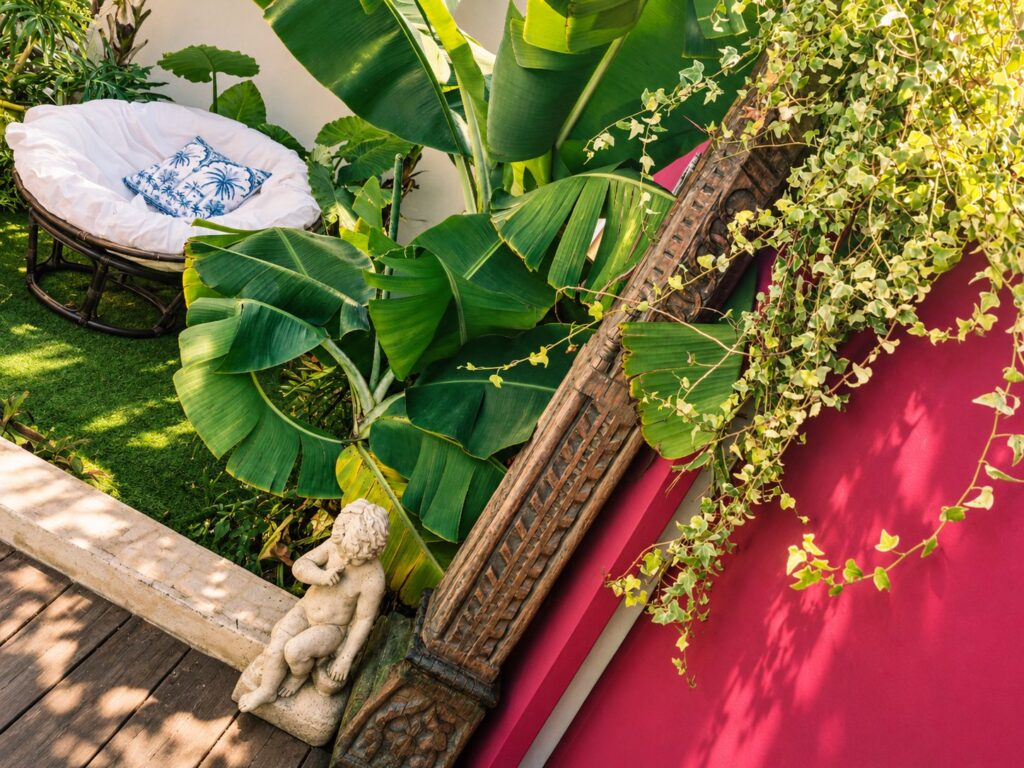
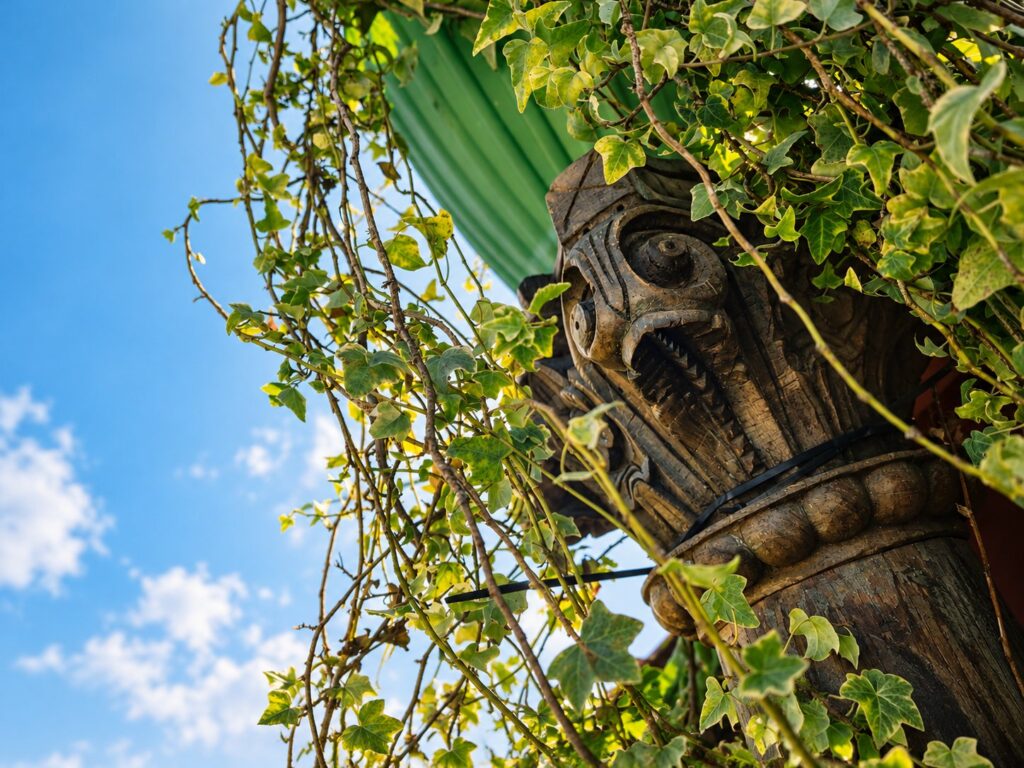
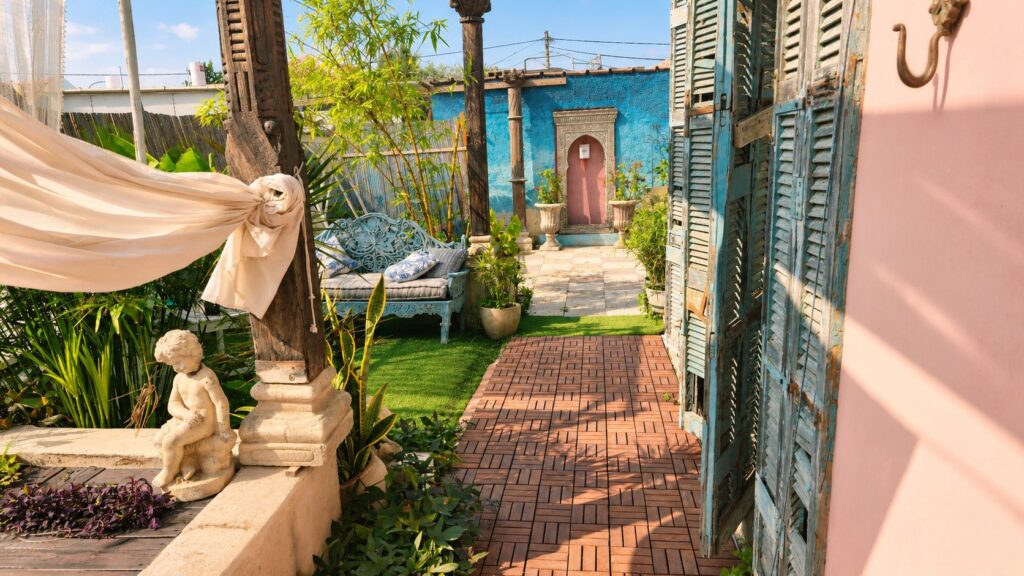
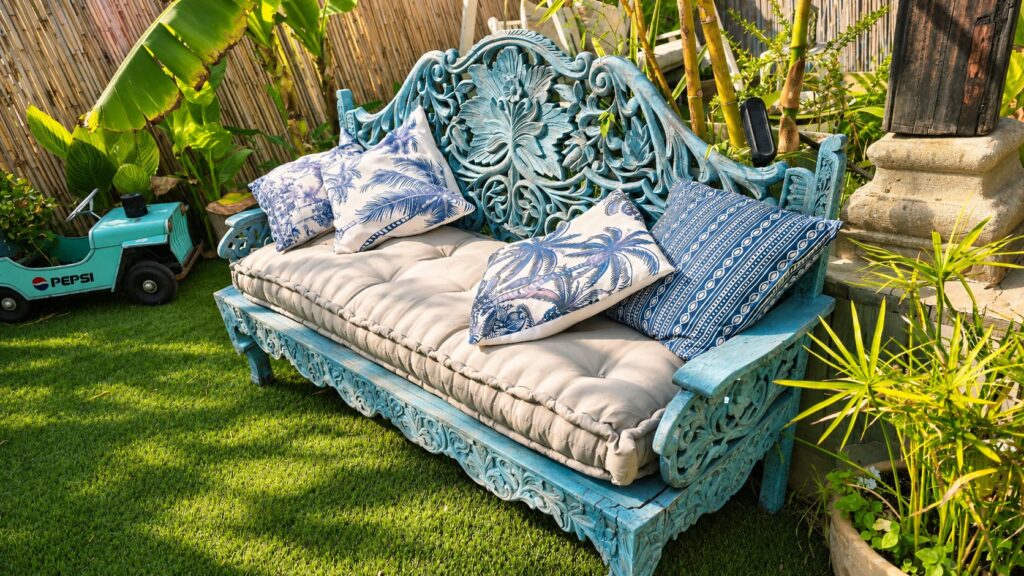
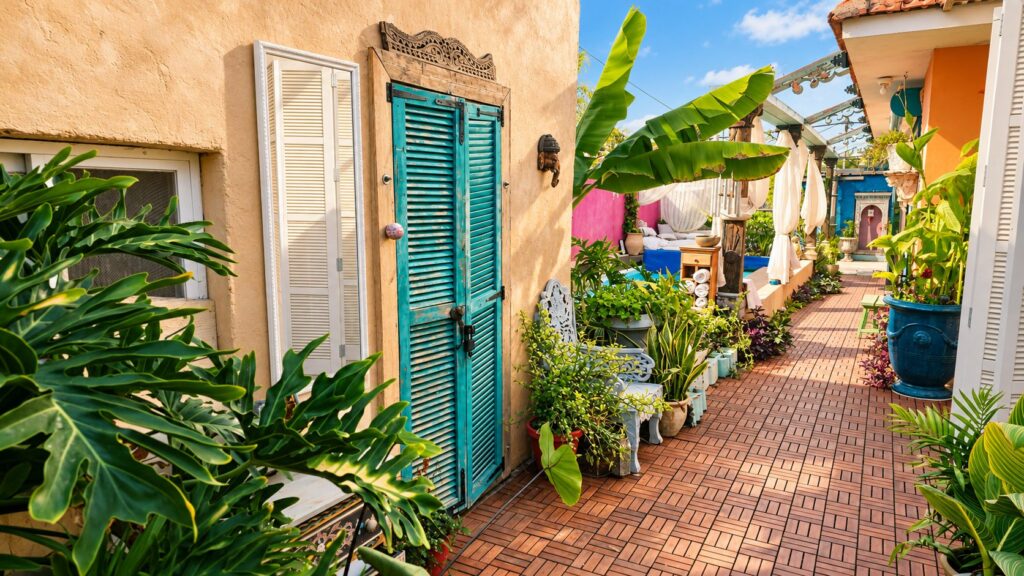
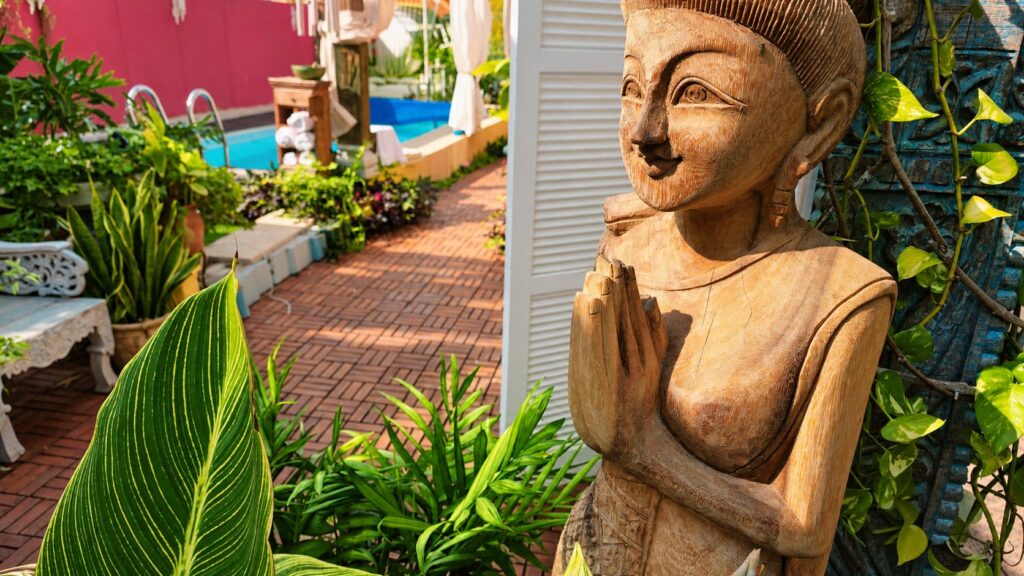
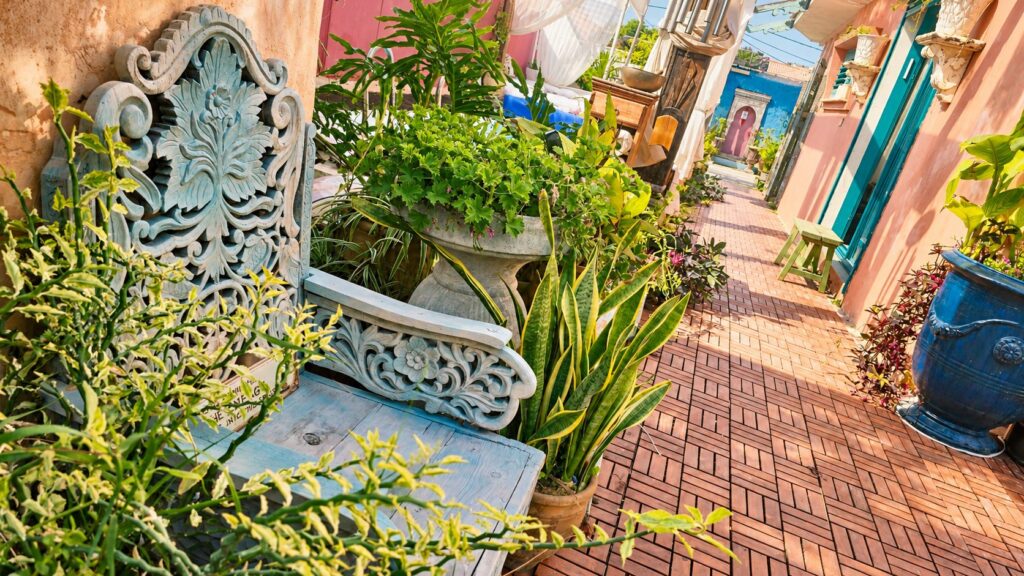
Antique pieces were woven into the compound, among them carved Indian columns about a hundred years old and an antique gate about two hundred years old.
To me, such pieces have a presence that no factory can produce.
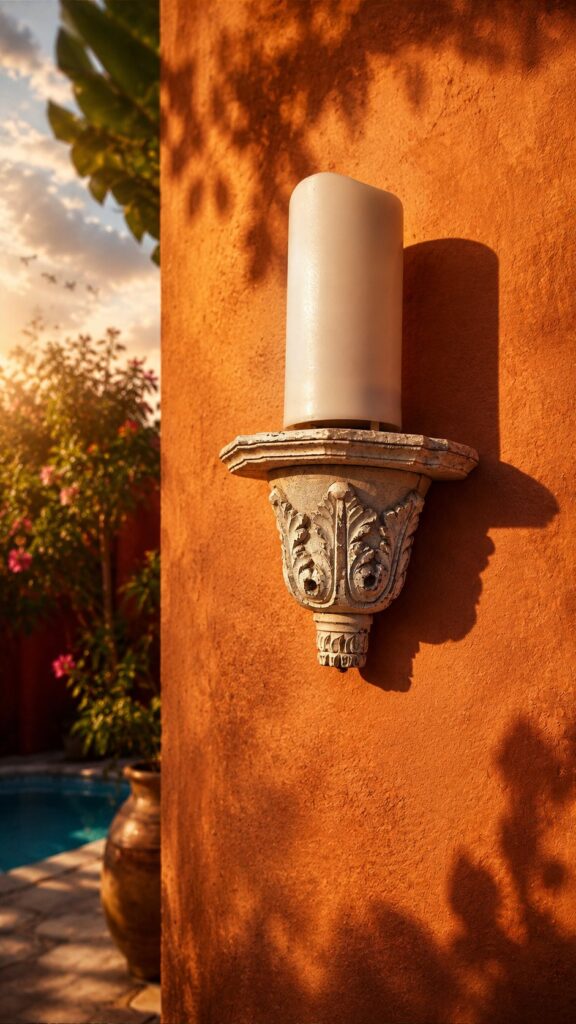
Time becomes part of their beauty. The cracks, the wear, the shifts in tone and the marks left by people over generations are not flaws to hide, but layers of beauty.
When I bring an antique piece into a new space, I don’t see it as just a decorative element. I see a meeting between eras.
Between the hands that made it many years ago and my own hands, which chose to give it a new life.
And so Peleh holds an ongoing dialogue between old and new, between authenticity and imagination, between craft and contemporary art.
Colour is not decoration. It is emotion.
Colour has always been a central means of expression for me.
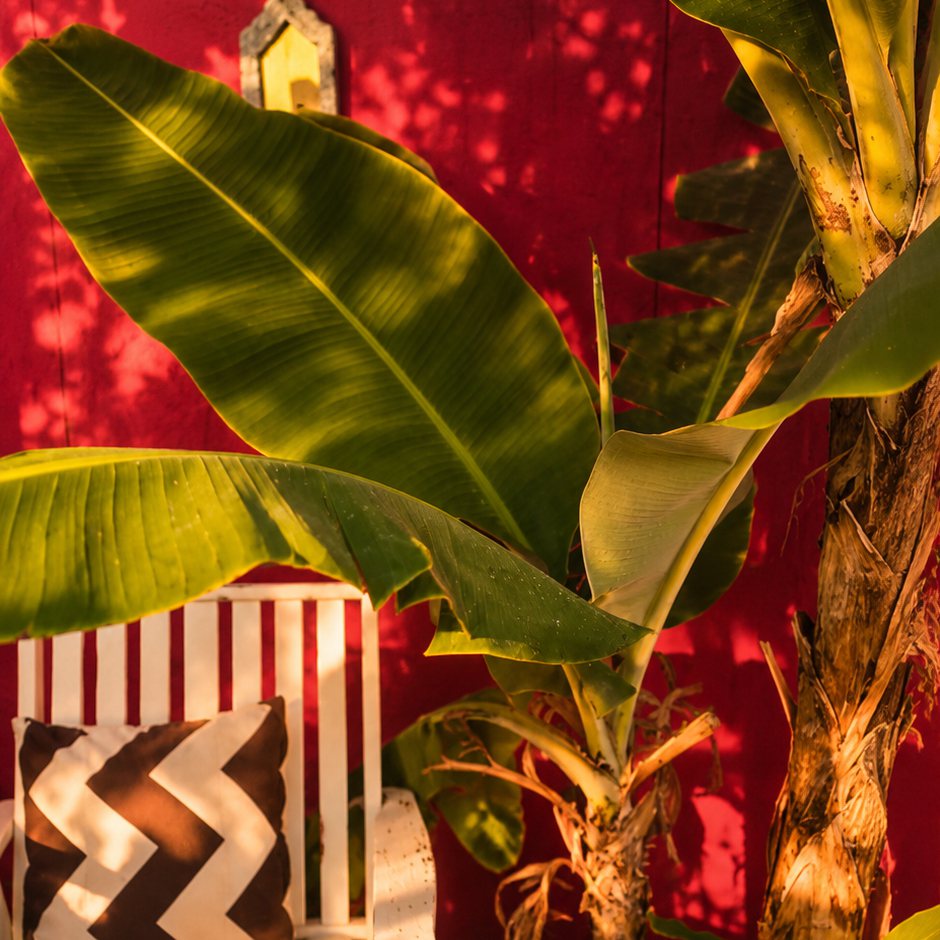
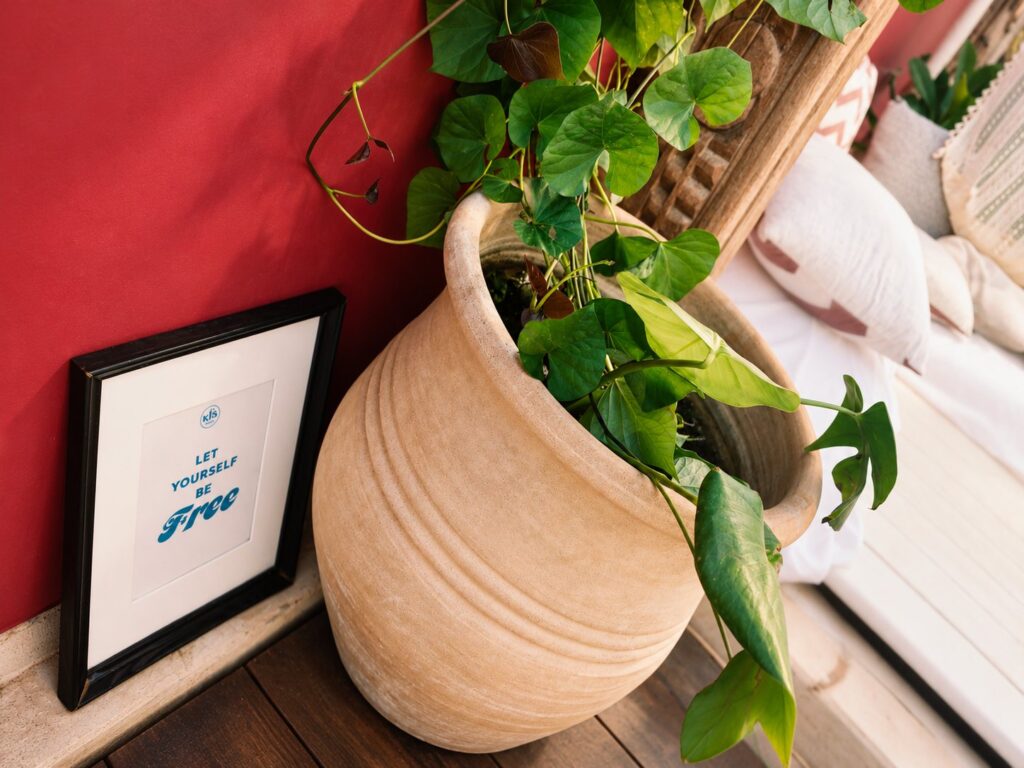
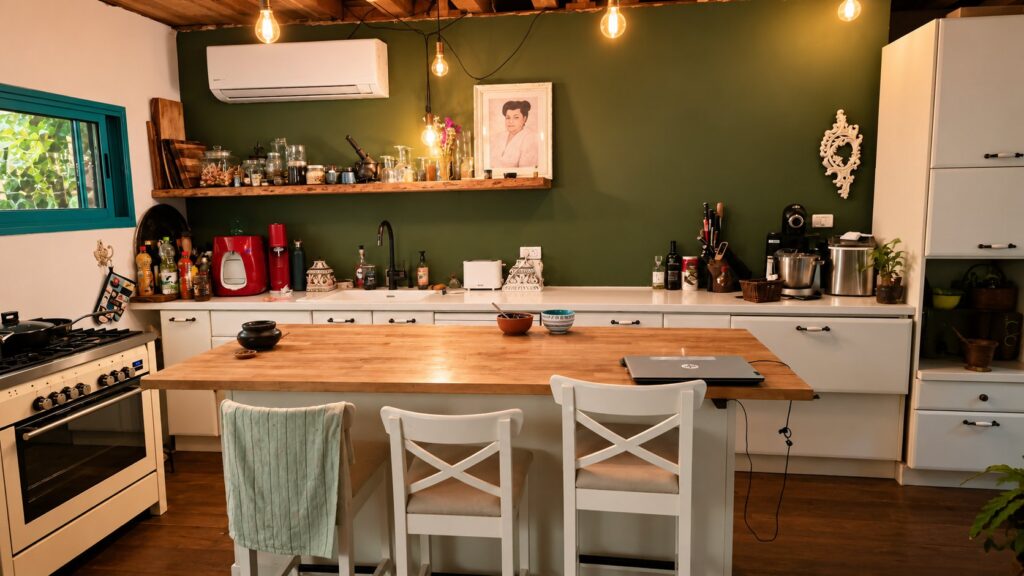
At Peleh I chose to create a rich, warm colour language full of character. Shades of turquoise, earth tones, natural wood, warm hues and green plants come together in a composition that doesn’t try to be minimalist or neutral.
The turquoise of the doors and arches, for example, is not only an aesthetic choice. It brings a feeling of freshness, freedom and an encounter with faraway worlds.
Alongside it, the natural materials and warm tones give the space depth, stability and intimacy.
I believe colour has the power to change the way we experience a place.
It can open up a space, warm it, calm it, spark curiosity or create a memory.
At Peleh, the colours don’t stand on their own. They work together, like the colours of a large painting you can walk through.
A composition you can move through
When I paint, I think about composition, balance, rhythm, light and shadow, and the relationships between shapes.
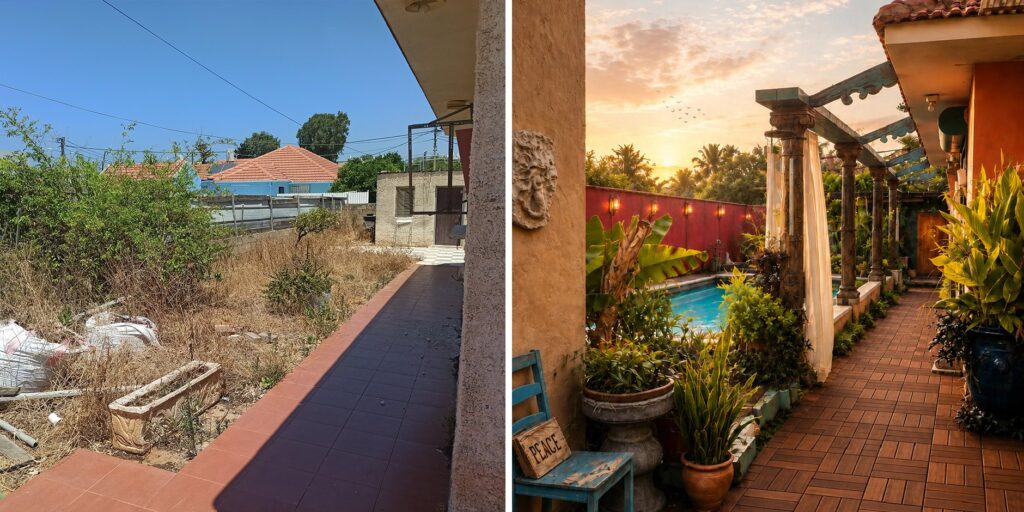
In designing Peleh I used exactly the same principles, only this time the canvas was three-dimensional.
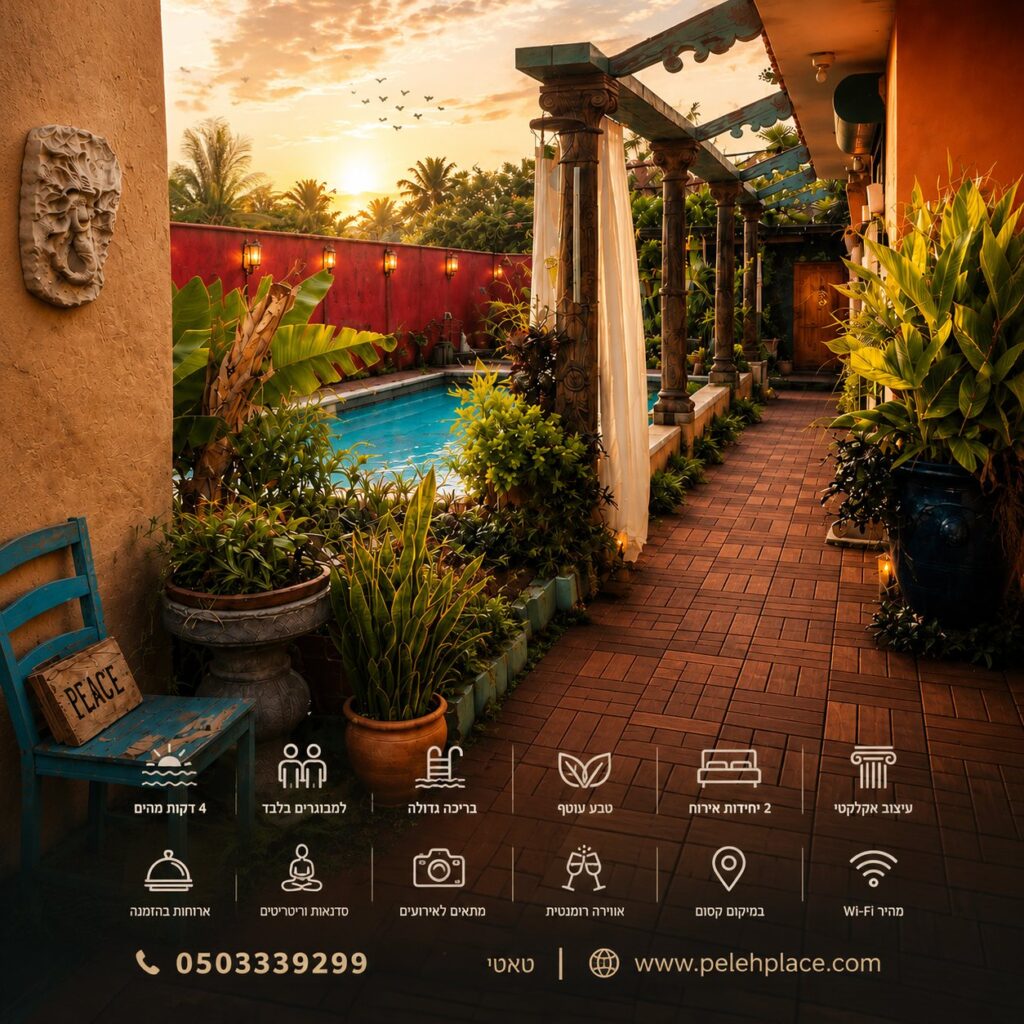
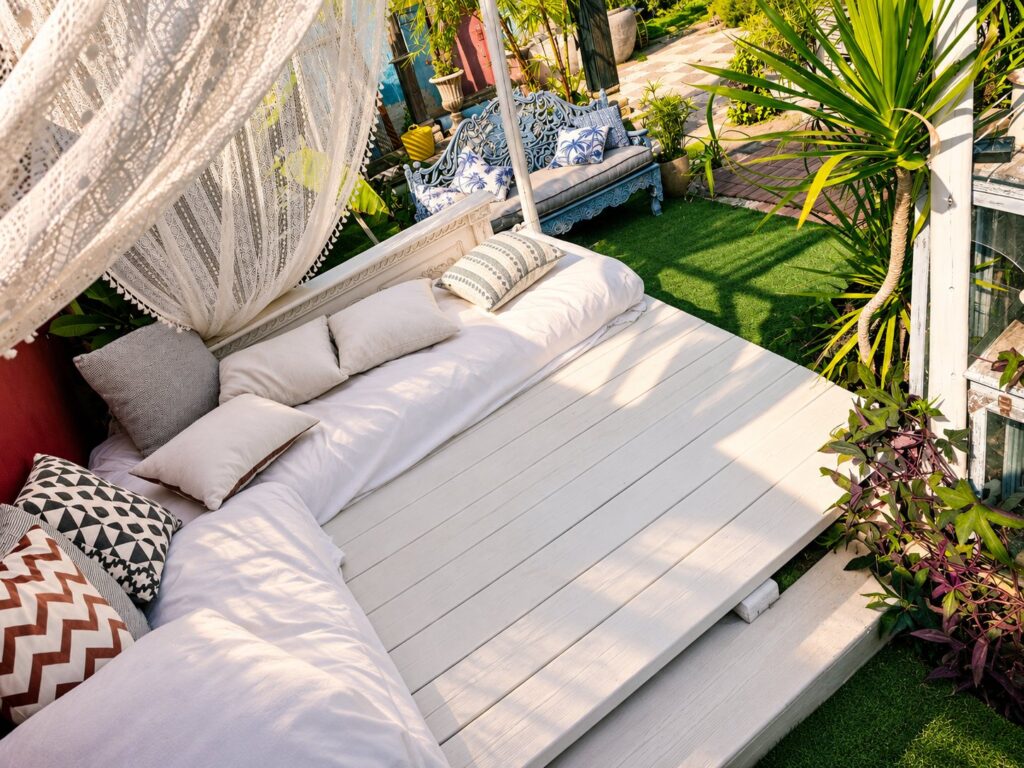
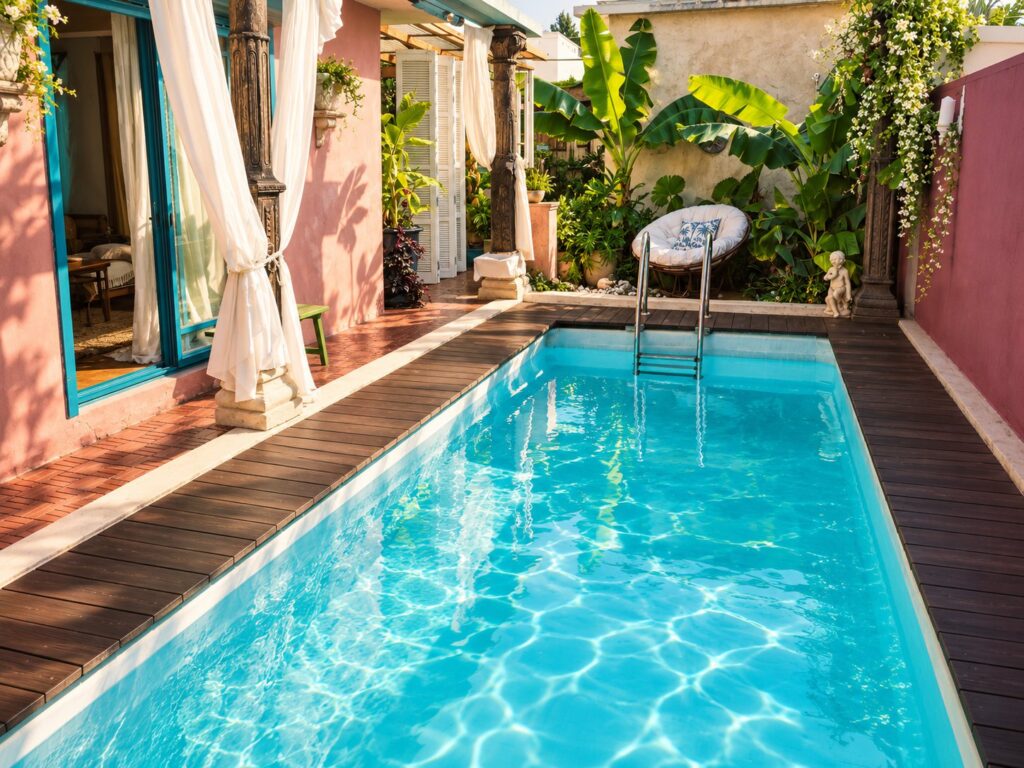
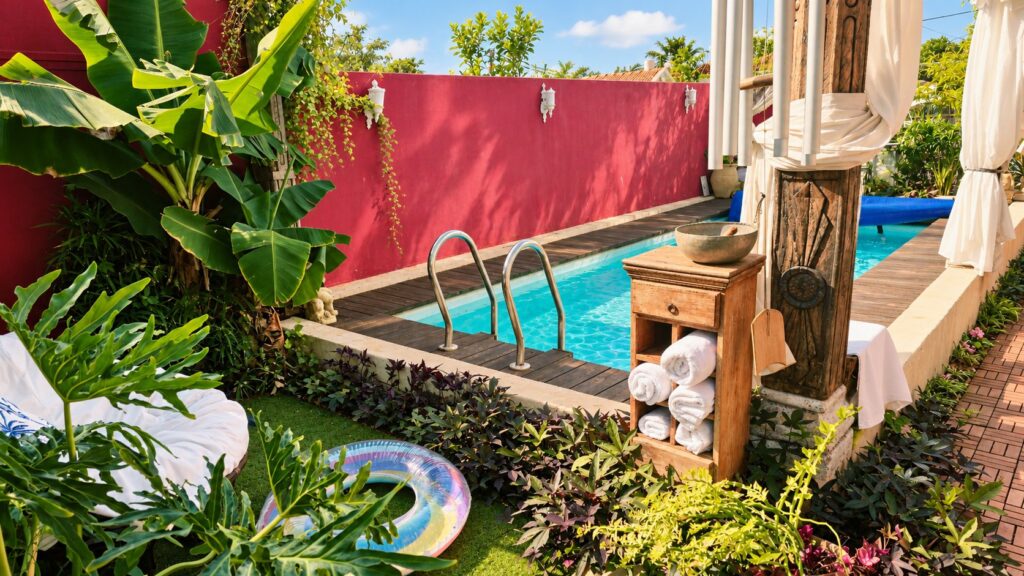
The paths, passages, arches, columns, plants, seating corners and the pool create a sequence of views and experiences.
Some places reveal themselves at once, and some are discovered gradually.
Sometimes the eye is drawn to an antique piece. Sometimes to light falling on a wall. Sometimes to the reflection of a column in the water.
I wanted to create a space you can’t take in all at once.
A place that invites movement, discovery and curiosity.
As in a good work of art, here too it matters to me to leave room for the viewer’s imagination.
Nature, light and water as part of the work
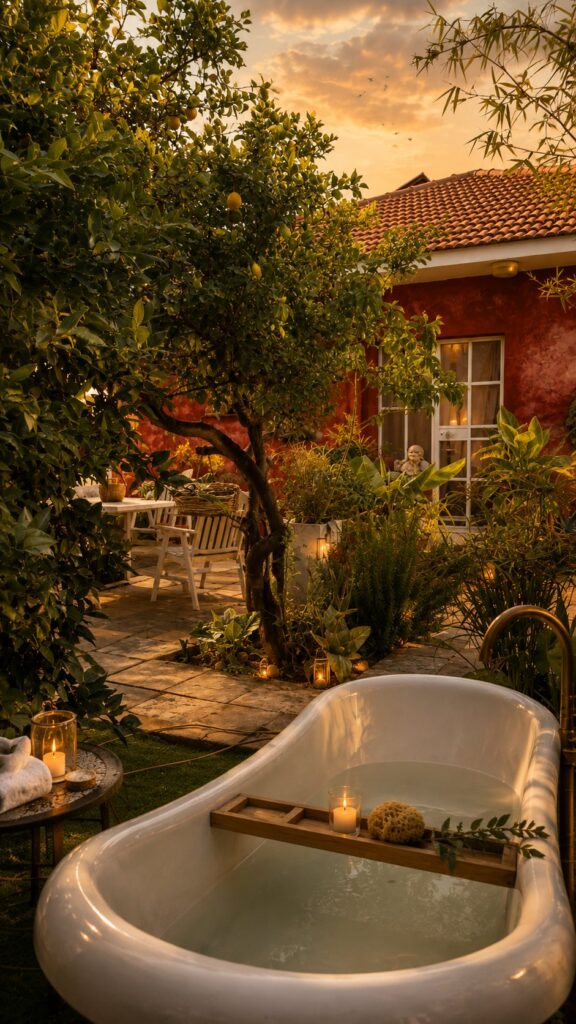
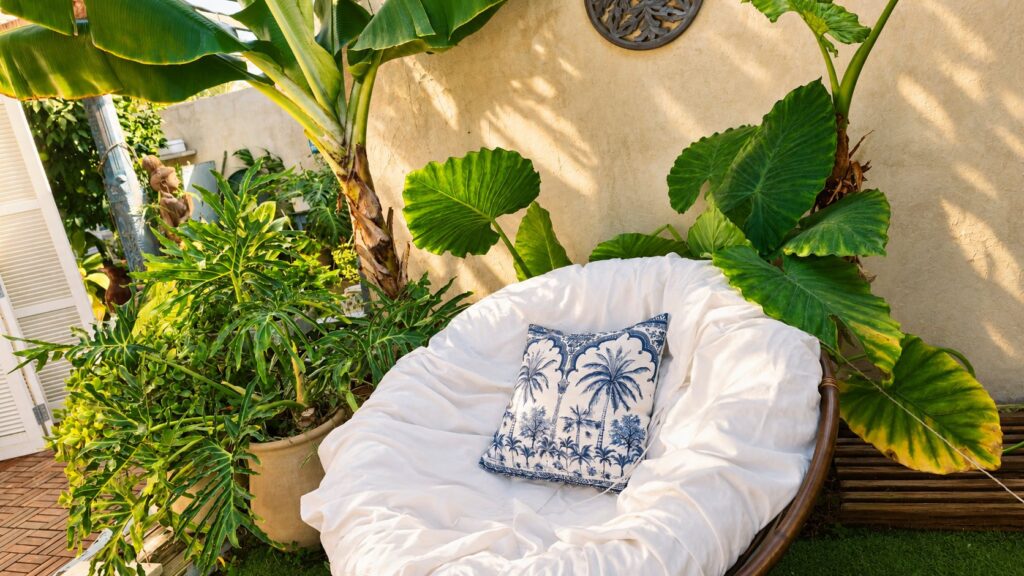
At Peleh, nature is not just a backdrop to the architecture. It is an inseparable part of it.
The plants soften the buildings, the water reflects the colours and shapes, and the light changes the character of the place throughout the day.
In the morning the compound has one character. In the afternoon the colours deepen, and in the evening the warm lighting creates an almost theatrical intimacy.
The pool, the garden and the open spaces let the architecture breathe.
I love the fact that this work is not static.
It changes with the seasons, with the light, with the weather and with the people in it.
In that sense, Peleh is a work that never looks exactly the same.
Between design and art — where is the line?
Over the years I have often asked myself where design ends and art begins.
To me, that line is far less clear than people tend to think.
Design is often meant to solve a problem, meet a need or create a functional environment. Art, on the other hand, seeks to provoke thought, feeling or interpretation.
At Peleh I wanted both worlds to exist together.
The place has to be pleasant, comfortable and inviting. But just as much, it has to inspire, touch the heart and leave a mark.
Every design decision was, for me, also an artistic decision.
Not only where to place a piece of furniture, but what story it tells.
Not only what colour to paint a wall, but what feeling it will evoke.
Not only how to light the courtyard, but what world will appear when the sun goes down.
A work that lives on through people
There is something special about creating a place where people truly live, even if only for a few days.
Unlike a painting hanging in a gallery, Peleh fills up with new stories every time.
A couple coming to celebrate love. People choosing to disconnect from routine for a while. A quiet conversation by the pool. A candlelit dinner. A moment of contemplation.
The people are not just guests inside the work. They become part of it.
And that may be what moves me most.
The ability to create a space that awakens feelings, memories and experiences in people that didn’t exist before.
Peleh — a work of art you can feel
When I look at Peleh today, I see much more than a design project.
I see a personal expression of my path as an artist.
My love of colour, of material, of people, of cultures, of unconventional aesthetics and of the freedom to create without surrendering to familiar definitions.
Peleh is a place where art is not separate from life.
It is in a door that opens, in the grain of the wood, in the ancient stone, in the reflection of the water, in the passage between light and shadow, and in the feeling that wakes up as you step inside.
Perhaps this, in the end, is the art I love creating most.
Not art you only look at.
Art you live inside.
Chen Haim Bachar
Multidisciplinary artist, designer and creator. Founder of Karnaf Studio and creator of Peleh — a place of hospitality and culture.